A wide label is not a universal shape. One boot may add volume through the entire last, another may open the forefoot but keep a close heel, and a third may look broad outside while narrowing abruptly beneath the steel cap. That is why workers can feel cramped in one extra-wide boot and unstable in another regular-wide model.
This guide ranks the decisions, not a single silhouette. The catalog ASINs are useful candidates because their listings identify wide options, but a listing title cannot confirm internal geometry or workplace suitability. Measure both feet, test the boot with the actual sock and approved insole system, and confirm every protective claim for the exact style before ordering it for work.
Compare boot families, not repeated size listings
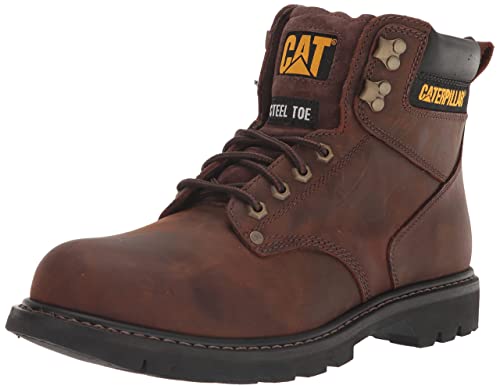
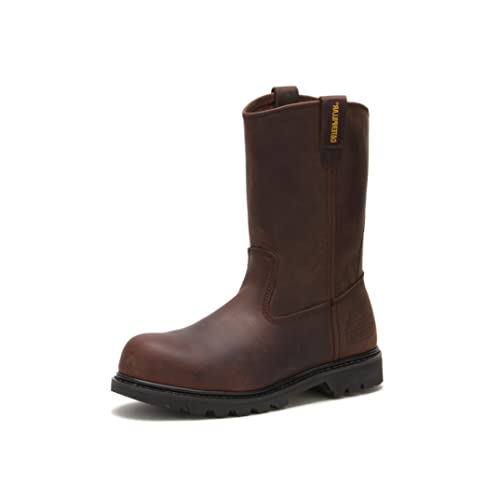
The three CAT Second Shift listings below are size or color variants of one lace-up family, not three independent boot designs. CAT Revolver Steel Toe supplies a pull-on comparison, while Ariat Groundbreaker Wide Square Toe Steel Toe provides a different pull-on toe shape. Use those construction differences to organize a fitting rather than counting each ASIN as another model.
The Nautilus extra-wide industrial-shoe listing is a low-cut alternative and should not be treated as equivalent boot-height coverage. Likewise, wide square toe describes shape; it does not prove that a chosen Ariat size uses the width required by your foot. Select the actual width option and match the exact safety-toe version.
Measure length, width, and volume
Measure both feet late in the day while wearing normal work socks. Record heel-to-toe length and ball width, and note whether the larger issue is forefoot spread, a high instep, toe height, or swelling. Fit the larger foot first. A two-dimensional chart will not capture every volume issue, but it prevents the common mistake of treating every pressure point as a need for more length.
Use the manufacturer's chart for the exact model and region. Width letters are not standardized across all brands, and men's and women's designations do not convert perfectly. If one foot is smaller, tune only modest excess volume with lacing or a manufacturer-compatible insert. Do not crowd the larger foot or stack thick insoles that lift toes toward the cap.
Find width under the cap
External toe shape can be misleading because the rigid safety cap and lining define usable room. While standing, your toes should clear the front, top, and sides. Walk down an incline, kneel, and crouch to check whether the foot slides into the cap. Pressure at the little toe, big-toe joint, or cap edge is a reason to compare another last, not a break-in project.
Leather and textile uppers can soften around the shaft and instep, but the cap does not widen. Persistent tingling, numbness, bruising, or sharp contact indicates a fit problem. Going longer may move the boot's flex point ahead of the ball of the foot and increase heel lift. Compare a wider last at the correct measured length before adding size.
Control the heel and instep
A wide forefoot works only if the rearfoot remains stable. Lace-up boots offer zones that can be adjusted, while pull-on boots depend heavily on last shape and instep hold. Check heel lift on stairs and inclines. Small movement in some pull-on constructions can settle, but repeated rubbing, foot rotation, or toe impact means the boot is not controlling motion.
High-instep wearers may need more throat opening and vamp volume rather than simply a broader forefoot. Conversely, a low-volume foot can swim in a boot that adds width everywhere. Look for multiple width offerings, clear return terms, and a last that solves your specific constraint. Avoid using very thick socks to rescue a fundamentally loose fit in hot conditions.
Match the boot to the job
First exclude models that do not meet the workplace hazard assessment, then compare fit within the suitable group. Uneven ground may favor torsional stability and a defined heel; smooth indoor floors may reward a lower, easier-cleaning tread. Waterproof construction, puncture resistance, electrical hazard properties, metatarsal protection, insulation, and chemical compatibility are separate features. Verify each on the exact style and do not transfer claims between colorways or related models.
OSHA does not approve individual boots. Under 29 CFR 1910.136, the employer ensures protective footwear is used where specified hazards exist and selects adequate PPE through the broader hazard-assessment process. Ask the employer which markings, height, materials, and outsole characteristics are required. A comfortable wide fit cannot compensate for missing protection.
Run a disciplined indoor fit test
Test on a clean indoor surface while the pair remains returnable. Wear the socks and authorized insole planned for the shift. Lace both boots, stand for several minutes, walk, climb stairs, crouch, and simulate the kneeling positions the job uses. Check heel hold, flex alignment, cap clearance, seam pressure, and whether swelling could reduce room later in the day.
Do not assume severe discomfort is normal break-in. Mild upper stiffness may ease, but rigid pressure and misaligned flex will not. If an orthotic is needed, ask whether the boot has sufficient depth and whether replacing the supplied footbed is permitted. A thicker device can change heel position and toe height enough to invalidate an otherwise promising fit.
Exact Amazon listings
Products to compare for this guide
Affiliate disclosure: As an Amazon Associate, we may earn from qualifying purchases. Product titles, images, ASINs, and destinations are matched to the exact listing; prices and availability remain on Amazon.




Sources and model documentation
Frequently asked questions
Best Wide Steel Toe Boots FAQ
Should wide feet size up in steel toe boots?
Not automatically. Start at measured length and compare the maker's wide last. Extra length can misalign the flex point, increase heel lift, and still fail to add room where the cap narrows.
Will wide steel toe boots stretch?
The upper may soften in some areas, but the steel cap and underlying last will not meaningfully widen. Cap contact requires another width or shape.
Are extra-wide labels the same across brands?
No. Width letters and the location of added volume vary by maker and model. Use the current size chart and an indoor movement test.
Can a removable insole help wide feet?
A thinner compatible footbed may add volume, but changing an insole can affect fit, support, and protective performance. Follow manufacturer and employer guidance rather than modifying safety footwear casually.
Final verdict
What to do next
The best wide steel toe boot is shaped for the wearer's actual constraint: forefoot breadth, toe height, instep volume, or a combination. Correct width should create cap clearance without trading it for heel instability.
Measure first, verify safety features second, and test movement indoors. The right boot feels secure on day one; break-in may soften the upper, but it should never be expected to reshape the protective cap.
Compare Wide Steel Toe Boots