Searching for the best steel toe boots for flat feet is often reduced to maximizing arch height, but that can be misleading. Foot shapes, symptoms, and work demands differ. A high contour that helps one wearer may create pressure for another, while excessive softness can feel pleasant initially yet lack the stable base a long shift requires. No catalog title can provide a medical recommendation.
Flat feet without symptoms do not usually require treatment. For work footwear, begin with the jobsite protection and compare width, heel control, flex location and room for any prescribed device. If you have pain, stiffness, weakness, numbness, walking or balance problems, or a newly changed arch, seek appropriate clinical advice rather than using a boot category as a diagnosis.
Best steel toe boots for flat feet prioritize stable fit
Stand and walk in each boot without assuming that more cushioning is better. The platform should feel predictable through the heel and forefoot, and the foot should not slide laterally during turns. The Wolverine Loader and Thorogood American Heritage titles both identify wedge outsoles, making them reasonable shapes to compare, but those titles do not prove suitability for any individual foot.
Width and arch profile are different variables
Forefoot pressure is not automatically an arch issue. Measure both feet with work socks and compare the wider CAT Second Shift, Carhartt Rugged Flex, and Timberland PRO Pit Boss examples when extra width is needed. A longer standard-width boot can misalign the flex point and loosen the heel. Seek a shape that accommodates the foot without side pressure or excessive volume elsewhere.
Check the flex point under load
The boot should bend where the foot bends near the ball, not through the arch or far ahead of the toes. Walk, crouch, and climb a few safe steps during the indoor trial. If the sole resists at the wrong location, the wearer may compensate through the stride. That mismatch is structural and is unlikely to disappear through upper break-in.
Plan space for an approved footbed or orthotic
If an exact boot has a removable footbed, confirm that detail with current model information rather than assuming it from the brand. A replacement device can raise the heel and toes or tighten the instep. Confirm with the manufacturer that the proposed footbed is compatible with the shoe’s required protective performance, as well as obtaining workplace acceptance. Follow the prescriber’s fitting instructions and recheck cap clearance, heel seating and collar position on both feet.
Do not compromise protective-toe clearance
Attempts to tune underfoot feel must not push the toes toward the steel cap. Test while standing, descending a safe incline, and crouching. Numbness or concentrated pressure is a sizing or shape warning. The cap will not stretch, and a thicker cushioned insert cannot solve a narrow protective-toe geometry; it may reduce usable space instead.
Keep the jobsite requirements in the decision
A boot that feels stable indoors still needs the right documented features for the job. The Timberland PRO Endurance title names puncture resistance; the Thorogood title names a slip-resistant wedge outsole and EH rating. Those attributes remain model-specific and require current verification. Waterproofing, metatarsal coverage, insulation, and other properties should never be inferred merely because a boot looks substantial.
Use symptom boundaries and professional guidance
Footwear comparison can identify pressure, sliding, unstable platform feel, or poor flex, but it cannot diagnose the reason for pain. Stop an indoor trial if symptoms are sharp, persistent, or worsening. A clinician who knows the individual history can advise on a prescribed device or health concern; the employer can clarify whether that device and boot configuration are accepted for the task. Bring both the intended socks and any prescribed orthotic to the fitting process when appropriate. Keeping these roles separate avoids turning catalog language into treatment advice while still allowing a careful, evidence-based boot decision.
- Reassess cap clearance every time a footbed or orthotic changes, because even small thickness changes consume internal volume.
- Bring persistent pain or new symptoms to a qualified professional instead of repeatedly changing boot inserts without guidance.
Exact Amazon listings
Products to compare for this guide
Affiliate disclosure: As an Amazon Associate, we may earn from qualifying purchases. Product titles, images, ASINs, and destinations are matched to the exact listing; prices and availability remain on Amazon.


Wolverine
Wolverine Men's Loader 8" Steel Toe Wedge Work Boot, Brown, 9 M US
ASIN B01MU264YP
View on Amazon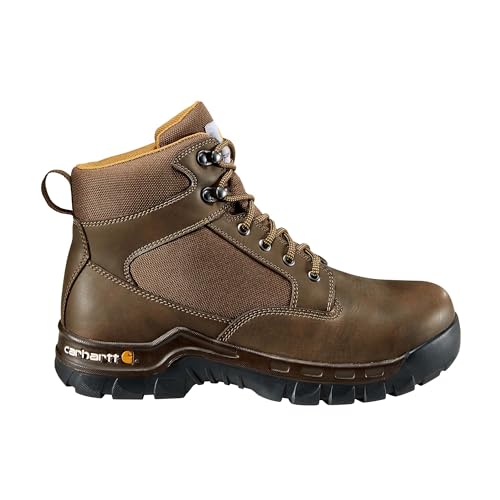
Carhartt
Carhartt Men's CMF6284 Rugged Flex® Steel Toe Work Boot, Brown,11 W
ASIN B08KTD6N59
View on Amazon
Timberland PRO
Timberland PRO Men's Pit Boss 6 Inch Steel Safety Toe Industrial Work Boot, Brown-2024 New, 10.5 W
ASIN B0CVNM8B28
View on AmazonSources and model documentation
Frequently asked questions
Best Steel Toe Boots for Flat Feet FAQ
Do people with flat feet need high-arch work boots?
Not universally. Arch contour preference and clinical needs vary. Choose by fit and stability, and seek professional guidance for symptoms or a prescribed support plan.
Are wedge-sole steel toe boots better for flat feet?
They are one platform style worth comparing, not a guaranteed solution. Geometry, firmness, flex, and individual fit matter more than the category name.
Can orthotics be used in steel toe boots?
Sometimes, if the device and boot are compatible and workplace rules allow it. Recheck all fit points because the device changes internal volume.
Should I buy wide steel toe boots for flat feet?
Only when measurement and fit show that more width is needed. Flat arch shape and forefoot width are related for some people but are not the same measurement.
Final verdict
What to do next
The strongest shortlist of steel toe boots for flat feet is built around neutral criteria: secure heel, appropriate width, aligned flex, stable platform, and sufficient room for any approved device. Treat comfort as individual evidence, not a medical promise, and reject any setup that creates steel-cap contact or misses a jobsite requirement.
Compare Men’s Steel Toe Boots