The most comfortable men’s steel toe work boots treat comfort as a fit outcome, not a single material. A plush footbed may feel impressive for five minutes while an oversized heel, narrow cap, or poorly aligned flex point becomes obvious several hours later. Men comparing work boots should first define their foot shape and shift pattern, then assess whether each boot stays controlled as the body moves.
The product catalog offers traditional lace-ups, wedge boots, moc toes, wide sizes, and industrial styles, but titles cannot rank subjective comfort. They can identify relevant construction cues for a shortlist. The meaningful comparison happens indoors, on both feet, with the sock and any accepted insole that will occupy space during the actual workday.
Most comfortable men’s steel toe work boots begin with cap clearance
Stand naturally and spread the toes. There should be no pressure at the front, sides, or top of the steel cap. Repeat the check while crouching and on a safe decline, when the foot moves forward. The rigid cap will not stretch during break-in. If a standard CAT Second Shift shape crowds the forefoot, its featured wide listing is one comparison point, not a guarantee.
Secure the heel without over-tightening
A comfortable boot lets the heel settle into the pocket while lacing controls the midfoot. Persistent lift can create friction; crushing the instep to stop it creates a different problem. Walk stairs and make controlled turns. If the heel moves despite sensible lacing, compare another volume or last instead of filling a clearly oversized boot with improvised padding.
Look beyond maximum softness
Cushioning compresses, so judge the complete platform: lateral stability, flex at the ball of the foot, and a sole shape suited to the surface. The Wolverine Loader title identifies a wedge work boot, and the Thorogood American Heritage title names a comfort insole and wedge outsole. Those are useful cues, but only an on-foot trial can show whether either geometry suits one worker’s stride.
Account for sock and insole volume
Test with the intended sock thickness. A winter sock can tighten the instep and raise the toes, while a thin sock can expose heel movement in a high-volume boot. If a workplace-approved replacement footbed is planned, install it before judging size. Added thickness often consumes vertical space, so recheck top-of-cap clearance instead of assuming an insole only changes cushioning.
Match upper and height to repeated motion
An eight-inch boot such as the titled Wolverine Loader covers more of the lower leg than the six-inch Timberland PRO Pit Boss. That difference can affect kneeling, driving, and ankle flex. The Carhartt Rugged Flex name suggests a model family to inspect, but it does not prove a particular movement benefit. Test the exact boot during tasks that dominate the shift.
Run a disciplined indoor wear test
Wear both boots on clean floors long enough to revisit the fit after the feet warm. Alternate standing, walking, stairs, and crouching; note heel motion, cap contact, arch sensation, and any concentrated rubbing. Compare finalists on separate sessions rather than relying on memory. Stop when numbness, sharp pressure, or instability appears—those are rejection signals, not comfort features that need patience.
Compare comfort notes at the end of each session
Use a short log instead of relying on the most recent sensation. Record where the heel moves, whether toes approach the cap, where the sole bends, how firmly the platform controls turns, and whether any pressure remains after the boots come off. Repeat the same route for each candidate. A model that starts plush but develops concentrated rubbing should rank below one that feels neutral and stable throughout. Also note changes caused by socks or an approved footbed, since those are part of the tested setup. This method turns “comfortable” from a vague label into repeatable observations without promising that another wearer will share the result.
- Give cap contact and numbness automatic rejection status rather than averaging them against softer cushioning.
- Retest the apparent winner on a separate clean indoor session before committing it to work.
Exact Amazon listings
Products to compare for this guide
Affiliate disclosure: As an Amazon Associate, we may earn from qualifying purchases. Product titles, images, ASINs, and destinations are matched to the exact listing; prices and availability remain on Amazon.


Wolverine
Wolverine Men's Loader 8" Steel Toe Wedge Work Boot, Brown, 9 M US
ASIN B01MU264YP
View on Amazon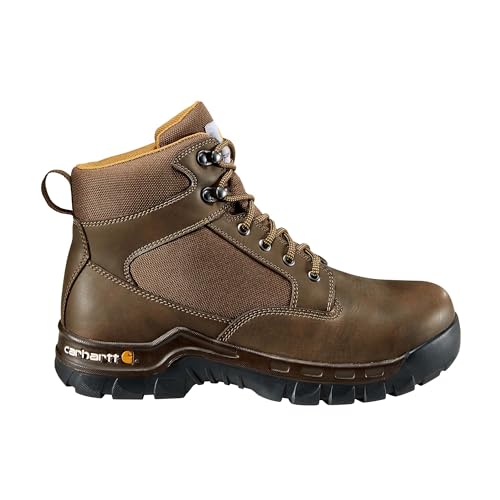
Carhartt
Carhartt Men's CMF6284 Rugged Flex® Steel Toe Work Boot, Brown,11 W
ASIN B08KTD6N59
View on Amazon
Timberland PRO
Timberland PRO Men's Pit Boss 6 Inch Steel Safety Toe Industrial Work Boot, Brown-2024 New, 10.5 W
ASIN B0CVNM8B28
View on AmazonFrequently asked questions
Most Comfortable Men’s Steel Toe Work Boots FAQ
Are softer steel toe boots always more comfortable?
No. Softness can feel good initially, but lasting comfort also requires stability, correct flex, heel control, and enough space around the cap.
Should comfortable work boots have extra toe length?
They need functional clearance without excess length. Too much space can allow sliding, heel lift, and impact against the cap on descents.
Can a new insole make steel toe boots more comfortable?
It may change underfoot feel, but it can also reduce internal volume. Use only a compatible, workplace-accepted option and recheck cap clearance and heel fit.
Will uncomfortable steel toe boots soften enough over time?
Some uppers soften, but the cap, last, and basic length do not. Numbness, rigid pressure, or a misplaced flex point calls for another fit.
Final verdict
What to do next
Choose the most comfortable men’s steel toe work boots through elimination, not marketing language. Remove any pair with cap contact, heel instability, or task-incompatible height; then compare stable platform feel across a realistic indoor trial. The right boot should feel controlled and unremarkable, letting attention return to the work.
Compare Men’s Steel Toe Boots