How should pull-on work boots fit when there are no laces to fine-tune them? The answer depends on three connected zones: the instep admits and retains the foot, the heel pocket controls lift, and the forefoot provides space without letting the foot slide. The right pair can feel snug during entry yet settled once the heel seats; the wrong pair may be easy to put on because it is simply too large.
Steel toe models make this check less forgiving because the cap will not stretch. Fit both feet late in the day with the intended work socks and any approved insole. Keep the outsole clean during an indoor test, and compare more than one last if the heel and forefoot seem to demand contradictory sizes.
How should pull-on work boots fit at the instep?
The foot should move past the instep with controlled pressure rather than falling into the boot. Once seated, the instep should hold the midfoot without pinching, numbness, or a hard ridge. Chelsea gores and taller Wellington shafts create different entry sensations. The Ariat Groundbreaker and Wolverine Rancher Level are Chelsea examples, while the Wolverine Carlsbad title identifies a Wellington.
Understand normal versus excessive heel movement
A small amount of lift may occur while a new upper establishes its flex pattern. Movement is excessive when the heel repeatedly loses contact, rubs, feels unstable during turns, or sends the foot forward into the cap. Walk enough indoors to see whether the motion is controlled. Do not assume blisters are a necessary break-in stage or use pain as evidence of correct snugness.
Check steel toe clearance in motion
Stand, crouch, climb stairs, and use a safe decline. The longest toe and outer toes should not touch the front, side, or top of the cap. Added length may increase nominal room but also create forward sliding. If side pressure is the issue, compare the wide CAT Revolver listing against another last instead of automatically moving up a full size.
Fit Wellington and Chelsea boots differently
A tall Wellington surrounds more of the lower leg and may feel looser at the shaft while still holding the heel correctly. A Chelsea uses a lower collar and elastic gores, placing more importance on the instep and heel pocket. Shaft looseness is not the same as heel instability. Judge each silhouette at the parts intended to retain the foot rather than expecting identical sensations.
Use socks and footbeds without crowding the cap
Try the exact sock thickness planned for work. A thicker sock can refine a very small volume difference, but it should not be the only thing preventing major lift. Any replacement footbed must be compatible and workplace-accepted. Because added thickness raises the foot, repeat the top-of-cap and instep checks rather than focusing only on underfoot feel.
Run an indoor pass-or-return checklist
Test both boots through several clean-floor sessions. Entry should be repeatable, heel movement controlled, cap clearance consistent, and the sole’s flex aligned with the ball of each foot. Note friction rather than waiting for a blister. If one foot is smaller, tune only modest differences with suitable socks or an approved fitting approach; do not compromise the larger foot.
Recheck fit after the upper warms
A brief try-on may miss changes that appear after walking. During a longer clean indoor session, pause to check whether the instep remains comfortable, the heel lift has increased, or the foot now reaches the cap on a decline. Compare right and left boots separately. If a fit starts secure but becomes loose, extra length or volume may be allowing migration. If pressure intensifies, the shape may be too small or incompatible. A useful break-in trend is gradual flex in the upper, not a growing need to tolerate rubbing. Preserve the return condition until the fit remains acceptable through repeated motion.
- Check the collar and shaft during sitting, driving motions, and kneeling without confusing those contact points with heel retention.
- Fit the larger foot first, then address only modest differences on the smaller side.
Exact Amazon listings
Products to compare for this guide
Affiliate disclosure: As an Amazon Associate, we may earn from qualifying purchases. Product titles, images, ASINs, and destinations are matched to the exact listing; prices and availability remain on Amazon.
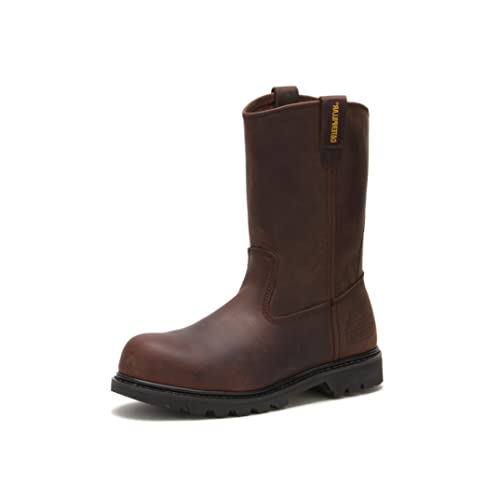

Wolverine
Wolverine Men's Rancher Wpf Steel Toe Wellington Work Boot Black/Brown 8 M US
ASIN B01MV5Q1AY
View on Amazon


Sources and model documentation
Frequently asked questions
How Should Pull-On Work Boots Fit? FAQ
How much heel slip is normal in pull-on work boots?
A slight amount can occur when new and may decrease as the sole and upper flex; follow the exact model’s fitting guidance. Persistent lift, friction, or instability is too much.
Should pull-on boots be hard to take off?
They can require deliberate removal, but severe instep pressure or numbness is not desirable. The fit should be secure, not painfully restrictive.
Will steel toe pull-on boots stretch wider?
The upper may soften, but the cap and underlying last do not meaningfully widen. Side pressure requires another width or shape.
Can thick socks stop heel slip?
They may tune a small volume difference, but they can also crowd the cap and retain heat. They cannot correct an oversized or badly shaped boot.
Final verdict
What to do next
A properly fitted pull-on work boot feels deliberate at entry and controlled in motion: the instep retains, the heel stays stable, and the toes remain clear. Small settling is reasonable; repeated lift, rubbing, numbness, or cap impact is not. When those signs appear, compare another width, volume, or last instead of trying to force break-in.
Compare Pull-On Steel Toe Boots