The best pull-on steel toe boots remove loose laces and make changes quicker, but they also remove the most adjustable part of conventional boot fit. The last, shaft, instep, and heel pocket must work together. Oversizing for easy entry often lets the foot slide forward on slopes, while a tight instep can make the boot difficult to remove and still fail to create useful toe room.
The category includes tall Wellington boots, lower Chelsea profiles, traditional pull-ons, and knee-high molded PVC boots. Those shapes deliver different coverage and movement. Start with the employer’s hazard assessment and the site’s terrain and water exposure, then choose the profile. Steel toe remains only one feature; waterproofing, width, outsole, and other protection require exact-model verification.
Best pull-on steel toe boots by silhouette
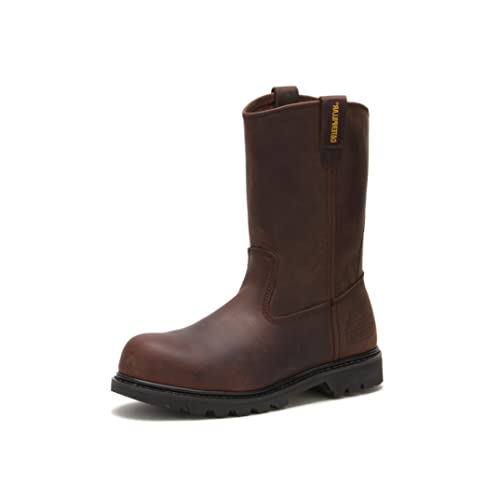
The CAT Revolver title identifies a pull-on construction boot; the Wolverine Rancher uses Wellington wording; the Ariat Groundbreaker is a Chelsea; and the Wolverine Carlsbad is a waterproof Wellington. A lower Chelsea can favor ankle movement and easier driving, while a taller Wellington or rain boot offers more upper coverage. Pick the form around the shift, not around a generic ranking.
Make heel retention the first fit test
Walk normally, take stairs, turn, and use a safe incline. A small amount of heel movement can occur in a new pull-on, but it should not feel unstable or create repeated friction. The foot must not surge forward into the cap. If lift persists after the upper settles into its natural crease, a different instep volume, heel shape, or size is more useful than thicker layers.
Check entry without buying excess volume
The boot should pass the instep with deliberate pressure rather than dropping on like a loose rain shoe. Pull tabs and elastic gores should be used as designed. The featured CAT Revolver appears in standard and wide listing examples, which can help compare volume. Width should relieve genuine forefoot pressure while leaving the heel controlled; extra length is not a substitute.
Separate waterproof and water-resistant pull-ons
The Ariat Groundbreaker Chelsea and Wolverine Carlsbad Wellington titles explicitly use waterproof wording. The CAT Revolver and Wolverine Rancher Level Chelsea titles shown here do not, so do not transfer that label to them. Water-resistant construction addresses lesser exposure. Even a waterproof pull-on is limited by its opening when water or splash rises above the collar.
Match shaft and outsole to the work setting
Farm mud, construction debris, finished shop floors, ladders, and vehicle pedals create different needs. Taller shafts may block more loose material but change ankle motion. Examine exact-model outsole information relevant to the surface, because pull-on entry says nothing about traction. No tread is slip-proof, and packed debris or wear can reduce usable grip regardless of the initial design.
Use socks only for fine adjustment
Try seasonal work socks during the indoor fit check. A slightly thicker sock can tune a modest volume difference, but it can also raise the toes and increase warmth. It cannot correct a boot that is too long, a heel pocket that is too broad, or a cap that presses at the sides. Recheck fit late in the day when foot volume may be greater.
Check removal as well as entry
Try taking both boots off after the indoor fitting, using the pull-on design as intended. Secure retention should not require painful force at the instep or pulling on a damaged tab. Check for uneven entry resistance between the two boots and inspect gores, tabs and stitching before outdoor wear.
Treat the two CAT Revolver listings as size-and-width examples of a model rather than two independent recommendations. Compare the actual fit of the required size; an easy-to-enter oversized pair can still slide forward when walking.
Exact Amazon listings
Products to compare for this guide
Affiliate disclosure: As an Amazon Associate, we may earn from qualifying purchases. Product titles, images, ASINs, and destinations are matched to the exact listing; prices and availability remain on Amazon.

Wolverine
Wolverine Men's Rancher Wpf Steel Toe Wellington Work Boot Black/Brown 8 M US
ASIN B01MV5Q1AY
View on Amazon


Frequently asked questions
Best Pull-On Steel Toe Boots FAQ
Should pull-on steel toe boots have heel slip?
A small amount may occur in a new pair, but persistent lift, friction, instability, or forward impact against the cap means the fit needs reassessment.
Are Chelsea boots the same as Wellington work boots?
No. Chelsea boots are generally lower and use elastic side gores, while Wellington profiles have taller pull-on shafts. Coverage and entry feel differ.
Are all pull-on steel toe boots waterproof?
No. Waterproof must be stated and verified on the exact model. Laceless entry and tall shafts do not establish waterproof construction.
Should I size up in pull-on work boots?
Not automatically. Extra length can increase heel lift and toe impact. Compare the correct width and instep volume with normal work socks first.
Final verdict
What to do next
Choose the best pull-on steel toe boots by finding the right construction for the job and the right last for the foot. Keep only models that pass the instep, hold the heel, clear the cap, and carry every separately required claim. Convenience matters, but secure fit and verified workplace suitability decide whether a laceless boot truly works.
Compare Pull-On Steel Toe Boots