The pull-on vs. lace-up steel toe boots comparison begins with fit: both can use similar upper heights and work-focused outsoles, yet they manage retention differently. Laces let the wearer change pressure by zone and open the upper for entry. A pull-on uses the last, shaft, heel pocket, gores, and instep to retain the foot, trading adjustment for faster on-and-off use and no loose lace ends.
The better design is contextual. A worker changing footwear at controlled zones may value quick entry, while someone with a narrow heel and high-volume forefoot may need the tuning range of laces. Neither closure proves waterproofing, traction, puncture resistance, or a safety standard. Those details remain attached to the exact model and current documentation.
Pull-on vs lace-up steel toe boots for fit
Lace-ups can secure the heel and midfoot while leaving the forefoot less compressed, provided the boot’s basic last is compatible. Pull-ons offer no equivalent zone adjustment. A small amount of initial heel movement can be normal, but substantial lift or toe collision is not. If thick socks are required to hold a pull-on in place, the underlying volume is probably wrong.
Compare entry speed and snag management
Pull-on styles such as the CAT Revolver and Wolverine Rancher Level Chelsea eliminate loose laces and can be quicker to change. That may suit jobs with repeated footwear transitions or snag concerns. Lace-ups take longer but allow tension changes during the day. Any workplace policy about closures or boot height takes priority over personal convenience.
Consider coverage independently of closure
A pull-on is not automatically taller: Chelsea profiles sit lower than many Wellington boots, and lace-ups also come in several heights. The Ariat Groundbreaker title identifies a Chelsea, whereas the Wolverine Carlsbad identifies a Wellington. Compare the actual shaft against debris, weather, kneeling, and employer rules rather than equating “pull-on” with maximum coverage.
Weather claims do not follow the closure
The Ariat Groundbreaker Chelsea and Wolverine Carlsbad Wellington titles explicitly say waterproof, while the CAT Revolver and Wolverine Rancher Level Chelsea titles shown do not. A gusseted lace-up may control entry around its tongue, but only exact-model information can establish waterproof construction. Whichever closure is chosen, water can still enter over the top.
Account for maintenance and inspection
Laces, hooks, eyelets, gores, pull tabs, and shaft seams experience different stresses. Inspect the closure components and upper regularly, along with outsole wear and any damage near flex points. Replace damaged laces with compatible parts rather than tying unreliable knots. For pull-ons, stretched gores or torn tabs can change entry and retention even when the sole looks usable.
Decide through job-like movement
Try both formats on clean floors with work socks. Walk, climb, crouch, turn, and use a safe slope. Note whether laces require excessive force to stop movement or whether a pull-on loses the heel. The steel cap should remain clear in both. Fit evidence during the repeated actions of the shift is more useful than judging ease of entry while seated.
Seasonal socks and closure maintenance
If winter and summer socks differ substantially, try both setups. A lace-up may accommodate the change by zone; a pull-on’s fixed instep and heel volume may not. Neither format should require excessive tightening or toe compression to bridge the difference.
Plan for worn components. Replace laces with compatible parts and inspect hooks and eyelets; have torn gores or pull tabs assessed rather than assuming they affect convenience alone. Keep a pair out of use when closure damage compromises secure fit or a required protective function.
Exact Amazon listings
Products to compare for this guide
Affiliate disclosure: As an Amazon Associate, we may earn from qualifying purchases. Product titles, images, ASINs, and destinations are matched to the exact listing; prices and availability remain on Amazon.
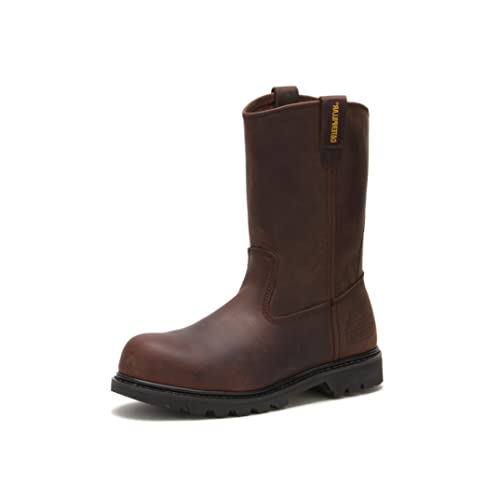

Wolverine
Wolverine Men's Rancher Wpf Steel Toe Wellington Work Boot Black/Brown 8 M US
ASIN B01MV5Q1AY
View on Amazon


Frequently asked questions
Pull-On vs. Lace-Up Steel Toe Boots FAQ
Are pull-on steel toe boots safer because they have no laces?
They remove loose lace ends, but overall suitability still depends on fit, the work hazards, closure policy, and every required model-specific feature.
Do lace-up work boots fit more foot shapes?
They provide more adjustment, but lacing cannot correct a wrong last, short length, narrow cap, or excessively wide heel pocket.
Which boot type is faster to put on?
Pull-ons are generally quicker when their instep fit is correct. A pair that is oversized merely for fast entry can become unstable during work.
Can pull-on and lace-up boots both be waterproof?
Yes, when the exact model explicitly carries waterproof construction. The closure format alone does not establish that claim.
Final verdict
What to do next
Choose pull-on steel toe boots when quick changes, reduced lace snag, and a compatible fixed-volume fit are valuable. Choose lace-ups when precise tension control better suits the foot and movement. In either case, verify protection model by model and reject heel instability, cap contact, and any shaft or outsole mismatch with the actual site.
Compare Pull-On Steel Toe Boots