Molded rubber and PVC safety boots solve a specific problem: repeated wet, muddy, or rinse-down exposure that can overwhelm ordinary leather uppers. Their continuous shells can simplify cleaning and water exclusion, but the open top remains a hard limit. Once liquid enters over the collar, the boot can hold it against the foot and become difficult to dry.
These boots also fit differently because there are no laces to tune the forefoot or heel. The internal last, instep, lining, sock system, and shaft shape control movement. The catalog candidates provide a useful comparison set, but material compatibility, protective markings, and traction claims must be confirmed for the exact model and exposure before purchase.
PVC is not the same material as rubber
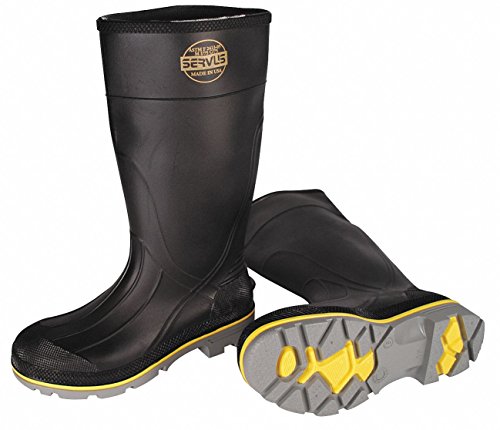
The shopping category includes molded PVC as well as rubber-based boots. The Servus Comfort Technology and XTP catalog families provide PVC examples; Honeywell’s manufacturer catalog documents them as distinct constructions. The linked Dunlop Chesapeake title also identifies PVC. Do not assume that products grouped under rubber boots share the same chemical compatibility.
Choose the exact steel-toe version, since a familiar wet-work family can also have plain-toe variants. A model called chemical-resistant still needs exposure-specific documentation. A historical manufacturer catalog can establish the product family, but current markings and the current technical sheet must settle a present procurement decision.
Define water depth and splash direction
Estimate the maximum standing-water depth, splash height, and likelihood of kneeling. A knee-high molded shell may help around mud and shallow water, but no open boot excludes water above its collar. Deep water, pressure washing, or liquid running down clothing may require coordinated protective garments and procedures selected by the employer, not simply a taller consumer rain boot.
Inspect design details that interrupt the molded shell, including seams, attached components, and damage-prone flex areas. 'Waterproof' may accurately describe an intact molded body under intended use, but punctures, cracks, and over-top entry change the result. Workers who alternate between deep mud and ladders should also consider how shaft height and stiffness affect mobility.
Match material to the actual substance
Rubber, PVC, and neoprene blends behave differently when exposed to oils, fuels, acids, alkalis, cleaners, manure, and process chemicals. A generic chemical-resistant claim is incomplete without the substance, concentration, temperature, and contact time. Provide the manufacturer with the safety data sheet and ask for compatibility documentation for the complete boot, including adhesives, lining, and hardware.
Do not rely on odor, color, or immediate appearance to judge degradation. Swelling, softening, hardening, cracking, and loss of bond can occur over time. Establish decontamination and inspection procedures with qualified workplace personnel. If a hazardous liquid enters the boot or the shell is compromised, follow the employer's exposure protocol rather than rinsing casually and returning the pair to service.
Fit a laceless safety boot
Try the boot with the exact sock or liner used at work. Toes must clear the front, top, and sides of the steel cap while standing, descending, and crouching. The heel should be controlled enough to prevent rubbing and forward impact. A little movement can occur in pull-on footwear, but repeated lift, rotation, or instability means the last is not a match.
Do not size excessively long for easy entry or thick winter socks. Extra length increases leverage and can make the foot slide on slopes. If seasonal insulation changes substantially, consider purpose-built configurations rather than forcing one oversized pair to serve all conditions. A compatible insole or volume reducer can make only small adjustments and must not lift toes into the cap.
Evaluate tread for mud and hard floors
Deep, open lugs can shed soft ground better than tightly packed patterns, but aggressive mud tread may feel less stable on smooth indoor flooring and can carry contamination inside. Work routes that cross surfaces require a compromise informed by incidents and employer requirements. No tread is slip-proof, and rubber as a material is not automatic evidence of traction.
Ask for whole-shoe test documentation when slip resistance is important and compare its conditions with the workplace. Clear packed mud and debris using approved methods before entering hard-floor zones. Inspect lug edges, cuts, embedded metal, and polished wear. Source control, drainage, cleanup, and walking practices remain necessary alongside footwear.
Verify protection and plan drying
Steel toe protection is distinct from puncture resistance, metatarsal coverage, electrical hazard properties, and chemical protection. Read the exact marking and current technical sheet. OSHA does not approve individual models; the employer selects footwear from the hazard assessment and ensures it is adequate. A steel shank described in a title is not automatically a puncture-resistant plate.
Moisture can accumulate from sweat even when outside water stays out. Remove compatible footbeds, empty debris, and dry according to the manufacturer's directions in a ventilated area. Avoid direct high heat that can damage molded materials or adhesives. Rotate pairs where the hygiene program permits, and replace boots with cracks, separation, cap damage, persistent contamination, or degraded fit.
Exact Amazon listings
Products to compare for this guide
Affiliate disclosure: As an Amazon Associate, we may earn from qualifying purchases. Product titles, images, ASINs, and destinations are matched to the exact listing; prices and availability remain on Amazon.


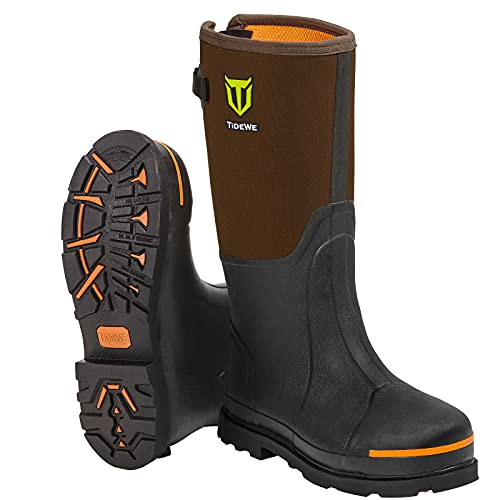
TIDEWE
TIDEWE Rubber Work Boots for Men, Steel Toe & Shank, Brown, Sizes 11
ASIN B08C5FVMML
View on Amazon

Sources and model documentation
Frequently asked questions
Best Steel Toe Rubber Boots FAQ
Are steel toe rubber boots fully waterproof?
An intact molded shell can exclude water under intended conditions, but the open top, punctures, cracks, seams, and attached components set limits. Confirm the exact model's claim.
Are rubber boots safe around chemicals?
Only when the complete boot is documented as compatible with the specific chemical, concentration, temperature, and contact duration. Rubber is not universally chemical resistant.
Should rubber work boots fit loose?
They need enough volume for the intended socks and toe-cap clearance, but should control heel lift and forward slide. Excessive looseness creates friction and instability.
Can steel toe rain boots be used for electrical work?
Do not infer electrical protection from waterproof rubber or a steel cap. Use only footwear with the exact electrical classification selected through the employer's electrical hazard assessment.
Final verdict
What to do next
Choose steel toe rubber boots around exposure depth, substance compatibility, secure laceless fit, and the surfaces crossed during a shift. The best shell is the one documented for the work, not the one with the broadest waterproof claim.
Confirm all markings, keep liquid below the collar, clean and dry the interior, and inspect the molded body often. Replace damage early because small cracks and fit changes can defeat the reason for choosing a molded boot.
Compare Steel Toe Rubber Boots