Puncture-resistant steel toe boots are relevant when sharp objects beneath the foot are part of the hazard assessment. A toe cap does not address that underfoot path, and an ordinary thick outsole should not be presumed puncture resistant. Both properties need clear support on the exact style.
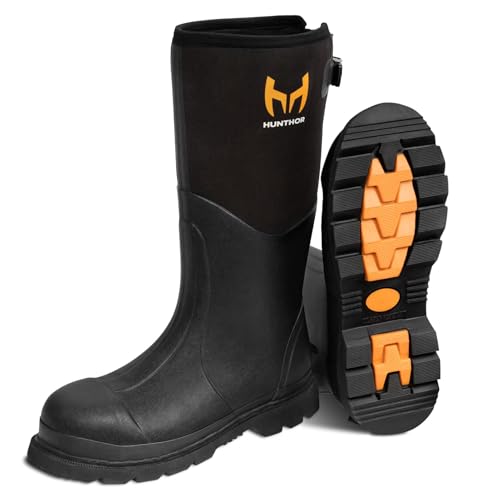
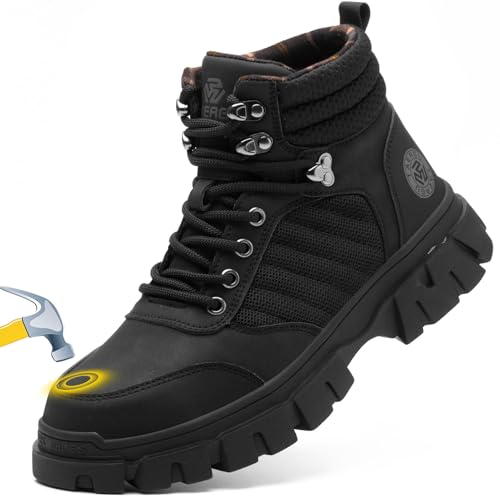
Our catalog provides explicit title evidence for the Timberland PRO Endurance, Hunthor rubber work boots, and several size variants of a waterproof six-inch men’s construction boot. The titles create a shortlist, not proof that all products use the same design or current marking. Verify the label and manufacturer documentation against the job requirement. Record the exact model checked.
Puncture-resistant steel toe boots cover different hazards
Steel toe describes a rigid protected zone at the front. Puncture resistance concerns penetration through a documented part of the sole system. Neither phrase means whole-foot protection, and one cannot substitute for the other. A workplace exposed to both needs evidence for both on the same exact boot.
Avoid informal language such as nail-proof. Sharp-object shape, force, angle, wear, and coverage vary, and no boot should invite deliberate testing. Workers should still follow housekeeping, platform, and material-handling controls rather than treating footwear as the only barrier.
Verify the exact underfoot construction
The Timberland PRO Endurance title explicitly says puncture resistant and steel safety toe. Hunthor’s title says puncture-proof with steel toe and shank; treat puncture-proof as marketplace wording that requires careful documentation, not an absolute promise. A steel shank is not, by its name alone, evidence of a puncture-resistant sole system. The generic six-inch listings also require documentation for their puncture-resistance claims.
For each candidate, confirm the exact ASIN, current product marking, protected area, and manufacturer instructions. Similar colors or adjacent sizes should not inherit evidence automatically. If a supplier cannot provide documentation that matches the employer’s requirement, remove the model from consideration.
Plate protection can change movement and feel
Underfoot protective construction may influence sole stiffness, flex location, weight, and ground feel. Those effects differ by design, so do not assume every puncture-resistant boot feels rigid or that a flexible-looking boot lacks protection. Test the verified product rather than the stereotype.
Walk, crouch, climb stairs, and use any safe job-relevant stance during an indoor trial. The boot should bend where intended without driving toes into the cap. Workers who kneel often should pay special attention to pressure through the forefoot and instep.
Fit the toe, heel, and sole system together
Use work socks and any approved insole. Replacement inserts can change internal height and alter how the foot interacts with both cap and flex point. Toes must clear the cap in every direction while the heel remains seated during descents.
Do not buy extra length to compensate for stiffness or width pressure. A long boot can flex incorrectly and permit forward slide. Compare width and last geometry, especially if the protective sole construction makes the preferred casual size feel unfamiliar.
Match upper and outsole to the site
Puncture resistance says nothing by itself about water, metatarsal exposure, electrical properties, chemical contact, or traction. The Endurance title names an industrial work-boot format; Hunthor names waterproof insulated rubber/neoprene construction; the six-inch listings name waterproof and non-slip claims. Verify every needed attribute separately.
No outsole is slip-proof. Mud, oil, dust, and packed debris can change contact, while deep wear may affect the overall sole system. Follow inspection and replacement guidance instead of waiting for the upper to fail visibly.
Shortlist by environment, not claim count
Compare the Endurance for a laced industrial direction, Hunthor for tall wet outdoor work, and the generic six-inch variants only after documentation is obtained. A listing with more adjectives is not automatically better; each extra claim creates another item to verify.
- Sharp-object exposure: require exact underfoot evidence.
- Wet ground: verify water construction and collar limits.
- Cold outdoor work: assess insulation, socks, and moisture.
- Frequent kneeling: test flex and cap clearance.
- Mixed hazards: verify each property independently.
Exact Amazon listings
Products to compare for this guide
Affiliate disclosure: As an Amazon Associate, we may earn from qualifying purchases. Product titles, images, ASINs, and destinations are matched to the exact listing; prices and availability remain on Amazon.

Sources and model documentation
Frequently asked questions
Puncture-Resistant Steel Toe Boots Guide FAQ
Does steel toe mean puncture resistant?
No. The cap and underfoot construction address different areas. Confirm puncture-resistance documentation separately on the exact steel-toe boot.
Are puncture-resistant boots nail-proof?
Do not treat any boot as absolutely nail-proof. Performance depends on documented construction and conditions, while sharp objects vary. Maintain site controls and never deliberately test footwear.
Can I add a puncture-resistant insole?
Do not assume an aftermarket insert creates an accepted protective system. Use only configurations documented by the manufacturer and accepted by the employer, then recheck cap fit and volume.
When should puncture-resistant boots be replaced?
After a sole-penetration event, stop using the affected pair and follow manufacturer and workplace replacement procedures, even if damage looks minor. Inspect routinely for other wear or damage; appearance alone cannot establish continued protection.
Final verdict
What to do next
The Timberland PRO Endurance offers the clearest established-brand exact-title lead in this catalog, while Hunthor targets a different tall, wet, insulated use. The generic six-inch variants remain candidates only to the extent their current documentation can be verified.
Choose the boot whose underfoot evidence, steel-toe marking, environment, and fit all align. Puncture language should narrow a search, never encourage a worker to ignore sharp-object controls or infer protection from outsole thickness.
Compare Steel Toe Boots