Are steel toe sneakers good for construction? Sometimes—but the word construction covers environments as different as indoor punch-list work and an open excavation after rain. A protective cap addresses a limited area. It does not automatically make an athletic upper, low collar, or outsole suitable for the rest of a site.
The decision belongs to the employer or controlling site requirements informed by the actual hazards. This guide shows how to evaluate a sneaker without claiming that a model is approved by OSHA. It also identifies conditions where a work boot is generally the more coherent format to investigate.
Are steel toe sneakers good for construction on this site?
Begin with the written footwear rule and task hazard assessment. Confirm whether low-cut footwear is allowed and which markings or design properties are required. Toe impact and compression may be only one concern alongside puncture, metatarsal impact, electrical exposure, static control, traction, water, or upper materials.
Check the exact model label and current manufacturer documentation. OSHA establishes employer obligations rather than approving individual shoes. A marketplace title, brand reputation, or steel-toe badge does not substitute for the site’s selection process.
Where a sneaker format may make sense
A verified steel toe sneaker may be reasonable for controlled, primarily indoor construction phases where surfaces are finished, debris is managed, weather exposure is minimal, and the site permits low collars. Inspectors, installers, or finish workers with high walking demands may value the mobility, subject to their specific tasks.
Athletic work shoes such as Skechers Cankton or Timberland PRO Intercept are candidates to investigate because their titles identify work-oriented steel-toe construction. That wording does not qualify them for a particular project. Each variant must clear the project criteria independently.
Where low-cut coverage becomes a liability
Loose aggregate, scrap, deep dust, and sharp debris can enter more readily above a sneaker collar. Mud and water can also cross the low opening quickly. A boot provides more upper material and a taller entry point, although it still needs suitable construction and cannot stop material that enters over its collar.
If the project mandates a particular boot height or construction, a steel toe sneaker is not an alternative merely because the cap is present. Follow the rule. Similar caution applies when the upper could encounter sparks, hot material, sharp edges, or substances for which ordinary athletic textile has not been documented.
Terrain, ladders, and outsole selection
Construction walking surfaces can change by the hour: smooth slab, dusty stairs, temporary decking, gravel, mud, or metal access points. An outsole oriented toward warehouse concrete may not be the best tool for that variety. Compare tread, platform geometry, and verified claims against the site conditions.
No shoe is slip-proof. Contamination and packed tread affect both sneakers and boots. Ladder and uneven-ground work may add footwear requirements not captured by the toe cap, so ask the safety contact rather than generalizing from an online product category.
Fit remains a construction-safety issue
A sneaker chosen for mobility still needs a controlled heel and adequate cap clearance. Descending stairs, carrying materials, and crouching can drive the foot forward. Contact with the front, side, or roof of the cap will not resolve through break-in.
Fit in work socks and any allowed insole, then recreate required motions on a clean surface. Oversizing to gain toe room can introduce heel lift, while a narrow athletic shape can squeeze the cap area. Change width or model geometry instead of accepting either compromise.
A jobsite decision checklist
A yes decision requires every gate to pass; one required feature cannot compensate for another missing one. Reevaluate whenever the phase, location, weather, or assigned task changes. Footwear suitable for an indoor walkthrough may not remain suitable when the same worker moves outside.
- Does the site allow low-cut footwear for the task?
- Does the exact model carry every required marking?
- Does the upper suit debris, material, and weather exposure?
- Does the outsole suit current surfaces and access methods?
- Does the shoe fit securely without cap contact?
Exact Amazon listings
Products to compare for this guide
Affiliate disclosure: As an Amazon Associate, we may earn from qualifying purchases. Product titles, images, ASINs, and destinations are matched to the exact listing; prices and availability remain on Amazon.
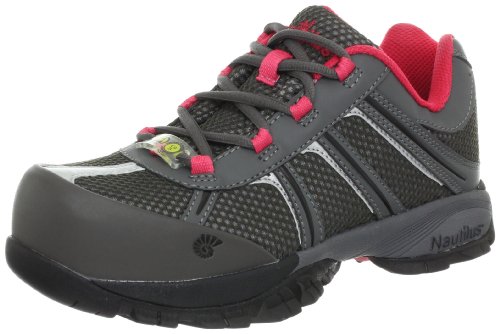
Nautilus
Nautilus Safety Footwear Specialty SD N1393 Steel Toe Athletic Work Shoes, 8 M
ASIN B005BK5WCA
View on Amazon
Skechers
Skechers Men Cankton Steel Toe Work Sneaker, Charcoal/Orange, 11.5 M US
ASIN B07YQB66ZL
View on Amazon

Timberland PRO
Timberland PRO Men's Intercept Steel Safety Toe Industrial Athletic Work Shoe, Black, 11W
ASIN B0CC4QTJWX
View on Amazon
Sources and model documentation
Frequently asked questions
Are Steel Toe Sneakers Good for Construction? FAQ
Does OSHA approve steel toe sneakers?
No. OSHA does not approve individual footwear models. Employers select suitable protective footwear for identified hazards and applicable requirements.
Can a steel toe sneaker replace a construction boot?
Only where the employer or site allows the low-cut format and the exact sneaker meets all task requirements. Extra boot coverage may be necessary for terrain, debris, weather, or policy.
Is a puncture-resistant title enough for nail hazards?
Do not rely on title language alone. Confirm the precise model’s marking and documentation, and match it to the workplace requirement. Toe protection and underfoot puncture protection are distinct.
Are construction sneakers better for indoor projects?
They may offer useful mobility on controlled indoor surfaces, but suitability still depends on debris, task, outsole, upper, fit, and project rules. Indoor location alone is not a complete assessment.
Final verdict
What to do next
Steel toe sneakers have a legitimate but bounded construction use case: verified low-cut footwear for tasks and phases where the site permits it and conditions remain compatible. They should not be promoted as a universal lighter substitute for boots.
When rough terrain, recurring water, heavy debris, upper exposure, or a height rule enters the picture, investigate purpose-appropriate boots. Let the current project requirements—not sneaker styling or a generic steel-toe label—make the call.
Compare Steel Toe Sneakers