The steel toe sneakers vs. work boots decision is not a contest between modern and traditional styling. It is a comparison of coverage, mobility, upper construction, and terrain intent. Either format can be the better tool when its exact markings and fit match the workplace; either can be a poor choice when selected from appearance alone.
A warehouse picker crossing smooth floors asks more from flex and heel control. A trade worker moving through rubble, mud, and debris asks more from the upper and outsole. This guide distinguishes those use cases fairly without claiming that a tall boot automatically protects every hazard or that a sneaker is always lighter.
Steel toe sneakers vs work boots: core tradeoff
Sneakers use a low collar and athletic profile, which can preserve ankle motion during walking, driving, and crouching. Boots extend higher and can place more material around the upper foot and ankle. That extra coverage may be useful around debris and rough settings, but can also add stiffness, heat, and bulk.
Height does not establish all protection. A boot still needs exact documentation for required toe, electrical, puncture, metatarsal, water, or outsole properties. A sneaker can meet a protective-toe requirement yet remain unsuitable because its low upper fails a separate site rule.
Mobility and high step counts
Athletic steel toe models such as Timberland PRO Intercept are plausible for indoor mobility because their titles identify athletic work-shoe formats. Less upper material can feel less restrictive, but total pair weight, sole stiffness, and fit still vary. Compare complete footwear rather than assuming every sneaker is light.
Boots may feel more deliberate through fast turns, though some workers value that planted sensation. For high mileage, test heel retention, forefoot flex, and swing feel. The best format is the one that stays controlled without supplying more construction than the job requires.
Coverage around debris and wet conditions
A higher collar creates a taller obstacle to loose material and shallow splashes, but water or debris can still enter over the opening. Waterproofness, seam construction, and gussets are separate questions. Never treat boot height alone as a sealed system.
The sneaker’s low collar is easier for debris to cross and leaves more ankle exposed. On a clean fulfillment floor that may be acceptable; around aggregate, scrap, deep dust, or recurring wet ground it can be a decisive disadvantage. Follow the site assessment and any mandated height.
Outsoles, ladders, and uneven terrain
Work sneakers are commonly oriented toward hard indoor surfaces, while many boots target varied ground. That pattern is not universal, so inspect the exact outsole. Tread depth, platform stability, contamination, and workplace guidance matter more than whether the upper looks athletic or rugged.
Ladders, slopes, gravel, and mud can demand a different underfoot platform from polished concrete. If those are routine, evaluate models built for that intent. No outsole should be described as slip-proof, and worn or packed tread needs attention in either format.
Fit and break-in expectations
Sneaker textiles may flex sooner than substantial boot uppers, while some leather boots soften with wear. Neither statement predicts an individual model, and neither protected cap expands. Cap contact is a fit rejection in both categories.
Fit with work socks, check heel hold, then walk downhill and crouch. A boot needs secure heel and appropriate ankle movement without painful pressure. A sneaker needs enough lockdown that athletic motion does not drive toes forward. Do not oversize either to manufacture toe room.
Choose by work intent
Pick sneakers when the work is primarily dry and indoor, low-cut coverage is allowed, and walking mobility dominates. Pick boots when terrain, debris, weather, or an employer requirement makes added upper construction valuable. Drivers and mixed-role workers should test pedal movement and outdoor transitions rather than selecting from a single task.
- Warehouse aisles: sneaker mobility often has a clear use case.
- Rough construction ground: boot coverage and terrain design often matter more.
- Occasional dry yard crossing: either may work if the exact outsole and rules fit.
- Persistent splash or mud: assess boot height and verified water construction.
Exact Amazon listings
Products to compare for this guide
Affiliate disclosure: As an Amazon Associate, we may earn from qualifying purchases. Product titles, images, ASINs, and destinations are matched to the exact listing; prices and availability remain on Amazon.
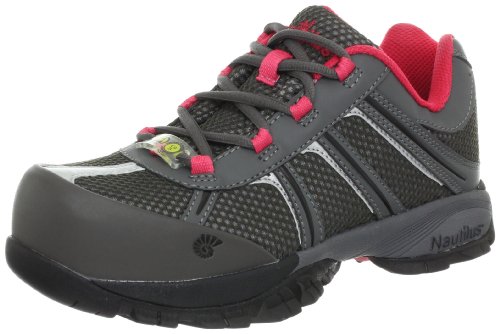
Nautilus
Nautilus Safety Footwear Specialty SD N1393 Steel Toe Athletic Work Shoes, 8 M
ASIN B005BK5WCA
View on Amazon
Skechers
Skechers Men Cankton Steel Toe Work Sneaker, Charcoal/Orange, 11.5 M US
ASIN B07YQB66ZL
View on Amazon
Unspecified brand
Steel Toe Shoes for Men Women Wide Non Slip Work Shoes Steel Toe Sneakers
ASIN B0B7W42DMM
View on Amazon
Timberland PRO
Timberland PRO Men's Intercept Steel Safety Toe Industrial Athletic Work Shoe, Black, 11W
ASIN B0CC4QTJWX
View on Amazon
LARNMERN
LARNMERN Men's Steel Toe Shoes Puncture Proof Nonslip Hiking Sneakers 12
ASIN B0H4R82L42
View on AmazonSources and model documentation
Frequently asked questions
Steel Toe Sneakers vs. Work Boots FAQ
Are steel toe sneakers as protective as work boots?
Their protective caps may address comparable toe requirements when properly marked, but sneakers have less upper coverage. Full suitability depends on every hazard and employer rule.
Are sneakers always lighter than boots?
No. They often use less upper material, but outsole, cap, cushioning, hardware, and size affect weight. Compare equivalent complete pairs.
Can I wear steel toe sneakers on a construction site?
Only if the exact model satisfies the site’s hazard assessment and footwear rules. Debris, terrain, weather, and required coverage may make boots the appropriate choice.
Which format is more comfortable?
Comfort depends on individual fit and task. Sneakers may favor flex and ankle mobility; boots may provide a preferred sense of coverage or stability. Neither is universally more comfortable.
Final verdict
What to do next
Use sneakers for the problem they solve well: frequent movement on suitable indoor surfaces with permitted low-cut coverage. Use boots when extra upper material and terrain-oriented construction address a real exposure. Do not elevate either silhouette into a general safety claim.
Once format is chosen, the same rules apply: confirm every required marking, fit around the rigid cap, secure the heel, and test the actual movements of the shift. A well-selected format still fails if the exact shoe does not fit.
Compare Steel Toe Sneakers