The best steel toe sneakers combine a familiar athletic profile with workplace-specific selection. The silhouette may make walking and crouching feel more natural, yet appearance does not confirm a toe standard, electrical property, puncture layer, or traction result. Verify the exact model first, then judge whether its fit and construction suit the route.
This guide compares sneaker candidates by high-step-count work, heel lockdown, forefoot flex, width, upper, and floor. Product titles identify useful starting points such as Nautilus Specialty SD work shoes, Skechers Cankton work sneakers, Timberland PRO Intercept athletic work shoes, and selected women’s Tinefiy sneakers. Check the current manufacturer information for the exact style before relying on any required safety property.
Best steel toe sneakers for warehouse mileage
Long aisles, picking routes, and fulfillment stations reward a shoe that moves smoothly without letting the foot drift. The Timberland PRO Intercept is an athletic steel-toe candidate to investigate. Compare complete pairs in equivalent sizes and use current manufacturer information rather than assuming that a lightweight phrase predicts the better shift.
Walk at job pace and repeat quick turns. A useful sneaker bends near the forefoot, retains the heel, and keeps toes off the cap during stops. Total weight matters, but a slightly heavier pair with better control can feel less distracting than a lighter shoe that slips or bends in the wrong place.
Heel lockdown is the athletic-fit priority
Rapid walking makes small fit errors obvious. Laces should draw the midfoot securely into the heel without crushing the instep or forcing the foot forward. Persistent collar movement can cause friction and reduces control, while aggressive tightening can introduce pressure elsewhere.
Slip-on sneaker styles such as LARNMERN loafers trade lace adjustment for fast entry. They can suit some indoor tasks if the opening and instep retain the foot, but they should be tested on stairs and pivots. Oversizing for convenience defeats the point of a work-ready fit.
Forefoot flex around a rigid cap
The shoe can flex behind the cap, but the protected zone itself will not stretch. Check the cap edge while crouching and pushing off, because that is when a mismatch can appear. Toes need clearance above and beside them as well as in front.
If side pressure occurs with spare forward length, look for another width or cap shape. If the whole foot slides forward, improve heel and midfoot hold. Buying longer may relocate the flex point and create additional movement rather than useful room.
Breathable-looking uppers and workplace exposure
Mesh and textile styling can appeal in climate-controlled buildings, but visual openness is not a measured breathability guarantee. More importantly, an athletic upper may not suit sharp debris, sparks, repeated liquid, or material restrictions. Identify the toughest routine exposure before favoring airflow.
A smoother or more substantial upper can be easier to clean and may offer more of a barrier against ordinary dirt, though it should not be assumed waterproof or hazard resistant. The correct trade is enough upper for the environment without unnecessary heat and stiffness.
Outsole choice for concrete, tile, and transitions
Indoor floors vary. Polished concrete, wet tile, dusty mezzanines, dock plates, and outdoor pavement need different traction strategies. The Ruivina title mentions slip resistance, which warrants closer verification on the exact model. No work sneaker is slip-proof.
Keep tread free of labels, fibers, dust, and stones. If the shift regularly reaches mud, rough aggregate, standing water, or ladder-intensive terrain, an athletic low-cut may surrender too much coverage or outsole depth. That is a reason to compare boots, not to overstate the sneaker.
A practical sneaker shortlist
Group candidates by the problem they solve, then verify required markings before ordering. Nautilus Specialty SD deserves investigation where its named SD intent matches a documented workplace need; Intercept provides an athletic profile to compare; Cankton offers a work-sneaker direction; women’s Tinefiy variants add women-focused sizing choices. Confirm every attribute rather than transferring claims between these models.
- High mileage: compare flex, heel hold, and equivalent-size weight.
- Wide forefoot: test width without creating rearfoot slack.
- Messy floors: investigate exact outsole claims and tread cleaning.
- Fast changes: test slip-on retention through turns.
- Mixed terrain: reconsider whether a sneaker is enough.
Exact Amazon listings
Products to compare for this guide
Affiliate disclosure: As an Amazon Associate, we may earn from qualifying purchases. Product titles, images, ASINs, and destinations are matched to the exact listing; prices and availability remain on Amazon.
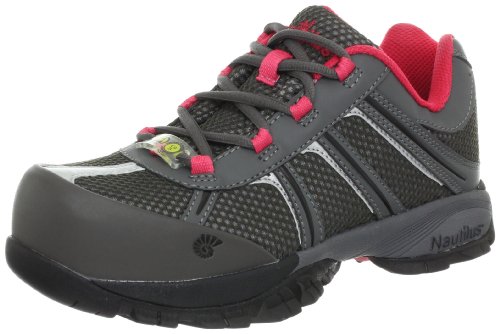
Nautilus
Nautilus Safety Footwear Specialty SD N1393 Steel Toe Athletic Work Shoes, 8 M
ASIN B005BK5WCA
View on Amazon
Skechers
Skechers Men Cankton Steel Toe Work Sneaker, Charcoal/Orange, 11.5 M US
ASIN B07YQB66ZL
View on Amazon
Tinefiy
Tinefiy Steel Toe Shoes for Women Comfortable Safety Work Sneaker Size 6
ASIN B0B4JGK4KF
View on Amazon
Timberland PRO
Timberland PRO Men's Intercept Steel Safety Toe Industrial Athletic Work Shoe, Black, 10M
ASIN B0CC4R91DG
View on Amazon
Timberland PRO
Timberland PRO Women's Intercept Steel Safety Toe Industrial Athletic Work Shoe, Sage/White, 8M
ASIN B0CC4RLS39
View on AmazonSources and model documentation
Frequently asked questions
Best Steel Toe Sneakers FAQ
Are steel toe sneakers suitable for all-day warehouse work?
They can be when the exact model meets workplace requirements, fits correctly, and suits the floor. Individual comfort and job conditions vary, so test movement rather than relying on athletic styling.
Do steel toe sneakers break in faster than boots?
Some flexible uppers may feel familiar sooner, but construction varies and the cap never stretches. Toe pressure should be corrected with another size, width, or model.
Are work sneakers slip-proof?
No. Even a model with a slip-resistant claim cannot eliminate falls across every contaminant and surface. Verify the claim, maintain tread, and follow workplace floor controls.
Should I buy a lightweight steel toe sneaker?
Lower weight can help a high-step-count preference, but fit, stability, flex, and required properties remain more important. Compare complete shoes in equivalent sizes when possible.
Final verdict
What to do next
For dry, mobile indoor work, verified athletic steel toe shoes can deliver a useful balance of flex and reduced upper bulk. The shortlist should be determined by required markings and floor, then narrowed by heel lockdown, toe clearance, and movement quality.
Do not make the sneaker silhouette perform a boot’s job. Where the routine includes heavy debris, substantial wet exposure, uneven ground, or coverage rules, choose footwear designed around those conditions even if it looks less athletic.
Compare Steel Toe Sneakers