Rubber work boots lack laces, so the heel pocket and instep must retain the foot through shape alone. Some small movement can occur as the shaft flexes, but large lift creates friction, reduces control, and drives toes toward a rigid safety cap. The solution is not always more padding; it begins by identifying whether the boot is too long, too wide, too deep, or simply built on the wrong last.
Fit adjustments should remain modest and reversible. A sock, compatible footbed, or purpose-made volume reducer can fine-tune a close fit. They cannot safely transform an oversized boot, and any insert that raises the foot can reduce cap height. Keep boots clean and returnable until the full movement test is complete.
Decide whether the slip is minor or unsafe
Observe the heel while walking on level indoor flooring and stairs. Minor lift that does not rub, rotate the foot, or alter gait may be tolerable in some pull-on designs. Movement that repeatedly creates a hot spot, allows substantial heel lift or drives the foot into the cap needs correction. Stop testing if there is pain, numbness, or instability.
Check both feet because asymmetry is common. If only the smaller foot moves, limited side-specific volume adjustment may work. If both heels lift and the boots also feel long, a smaller or differently shaped model is more appropriate. Do not judge fit solely by how easily the boot pulls on; convenient entry can coexist with poor retention.
Recheck length and instep hold
Seat the heel fully before standing. Toes need clearance in front, above, and beside the steel cap, including on a decline. If there is abundant space ahead and the flex point sits forward of the ball, the boot may be too long. If length is correct but the heel lifts, the instep or heel pocket may be too generous for the foot.
A lower-volume last or boot with a more defined heel may solve the problem better than a smaller size that crowds the toes. High insteps can complicate the choice: downsizing may improve heel hold but create top pressure. Compare shapes, not just numbers, and use the exact manufacturer's chart as an initial filter.
Use socks and inserts carefully
Try the sock weight intended for the temperature and employer rules. A slightly fuller work sock can reduce small movement and manage friction, but an overly thick sock may compress the foot, hold heat, or reduce toe-cap clearance. Avoid layering several socks merely to fill an oversized shell; wrinkles and moisture can create new blister points.
A manufacturer-compatible insole, heel seat, or full-length volume reducer may fine-tune depth. Retest after every change because raising the heel can make it shallower in the pocket, and a thick forefoot layer can push toes against the cap. Do not stack loose heel pads or use improvised materials that can shift during work.
Protect skin while correcting the cause
Moisture and repetition turn movement into blisters. Use clean, properly fitting socks and dry the boot interior between uses according to manufacturer instructions. Address any rough lining, debris, damaged seam, or folded footbed. Temporary blister protection may reduce friction, but it should not be used to normalize continuing unstable fit through a full shift.
If skin is broken, follow workplace first-aid and hygiene procedures, particularly in contaminated agricultural or washdown environments. Persistent blisters, altered sensation, or foot conditions that affect skin integrity warrant professional advice. Footwear guidance should not override medical instructions or an employer's PPE program.
Know when to exchange or replace
Exchange a new pair when heel slip remains after correct socks and one modest compatible adjustment, or when fixing the heel causes cap pressure. A different last is often the decisive solution. Do not cut the lining, glue pads permanently, heat-mold the shell, drill vents, or otherwise modify certified protective footwear.
For an older pair, new heel movement can signal compressed lining, worn footbeds, stretched components, sole deformation, or structural damage. Inspect the shell, heel counter area, sole bond, cap region, and tread. Replace the boot when deterioration prevents secure fit or compromises intended protection; an insert cannot repair structural wear.
Exact Amazon listings
Products to compare for this guide
Affiliate disclosure: As an Amazon Associate, we may earn from qualifying purchases. Product titles, images, ASINs, and destinations are matched to the exact listing; prices and availability remain on Amazon.


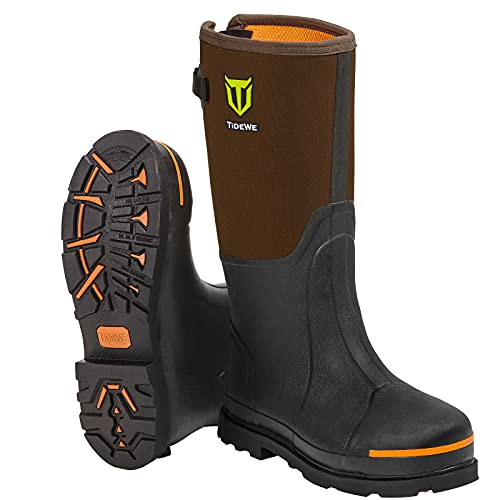
TIDEWE
TIDEWE Rubber Work Boots for Men, Steel Toe & Shank, Brown, Sizes 11
ASIN B08C5FVMML
View on Amazon
Sources and model documentation
Frequently asked questions
How to Stop Heel Slip in Rubber Work Boots FAQ
Is heel slip normal in rubber work boots?
A small amount can occur in pull-on designs, but it should not cause rubbing, rotation, instability, or toe impact. Persistent or increasing movement needs correction.
Will thick socks stop heel lift?
They may fine-tune a slightly roomy fit, but can create heat, wrinkles, and cap pressure. Use the work sock appropriate for the job rather than multiple layers to rescue oversizing.
Can I add an insole to steel toe rubber boots?
Only if the boot allows it and the component is compatible. Retest cap height, heel depth, and stability because an insole raises the foot.
Should I size down if my heel slips?
Only if length is excessive and the smaller size preserves toe clearance. If length is correct, a different heel, instep, or last shape is usually the better answer.
Final verdict
What to do next
Treat heel slip as a fit diagnosis. Correct small volume differences with the intended sock and one compatible, reversible adjustment; correct major movement with another size or last.
The final fit must hold the heel without forcing toes into the cap. If those goals cannot coexist, exchange the boot rather than modifying protective footwear or accepting blisters and instability.
Compare Steel Toe Rubber Boots