The waterproof vs. water-resistant work boots decision should guide two different expectations. Waterproof construction may involve a membrane, sealed assembly, or molded shell, depending on the exact boot. Water resistance can come from the upper, finish, or treatment and generally addresses lesser exposure. Neither label means water can never enter or that the boot fits every wet workplace.
A useful comparison considers exposure duration, water depth, shaft height, heat, drying time, outsole needs, and job rules. The steel toe is independent: it does not make a boot waterproof, and waterproofing does not establish toe protection. Catalog titles can support a model’s stated wording, while current manufacturer information should confirm the full construction and care instructions.
Waterproof vs water-resistant work boots in plain terms
Waterproof is the appropriate category when the exact model explicitly uses that term, as the KEEN Utility Pittsburgh, KEEN Lansing, Thorogood 1957, Wolverine Carlsbad, Timberland PRO Direct Attach, and DUNLOP Chesapeake titles do. Water-resistant is a narrower claim and should stay labeled that way. Do not rely on a treated or water-resistant boot for exposure that requires documented waterproof construction.
Construction matters more than surface appearance
A polished leather boot can shed droplets yet lack a waterproof assembly. A waterproof leather model may use components not visible from the outside. Molded PVC takes another approach by reducing upper seams, but the open top remains. Verify the exact model’s design instead of judging by leather thickness, stitching style, brand reputation, or a recently applied care product.
Match the claim to duration and depth
Brief travel through light rain differs from hours in wet grass, mud, or repeated puddles. Water resistance may be sufficient for incidental contact if the maker and employer support that use. Waterproof construction is the stronger starting point for repeated exposure, but shaft height sets a hard boundary. Standing water above the collar can enter any open-top work boot.
Balance water exclusion with internal moisture
Feet produce moisture during physical work, and a water-excluding layer can reduce how readily that vapor leaves. A waterproof boot can therefore feel warmer than an otherwise similar breathable design. Use suitable socks, rotate pairs if the work plan allows, and dry the interior according to manufacturer guidance. Dampness inside does not always mean external water crossed the upper.
Keep traction and chemical exposure separate
Waterproofing says nothing by itself about grip. The Thorogood 1957 title separately names a slip-resistant wedge outsole, illustrating that traction is another claim. No outsole is slip-proof, and performance varies by surface and contaminant. Likewise, a waterproof upper is not automatically compatible with oils, cleaners, or chemicals. Review site-specific requirements for every exposure.
Care can preserve a claim but cannot create one
Cleaning and a manufacturer-compatible treatment may maintain a suitable upper or improve water resistance. It cannot add a missing membrane, seal construction seams, or make a low collar taller. Follow exact material guidance and inspect wear at flex points. If a waterproof boot is cracked, punctured, or separating, stop assuming its original water-exclusion performance remains intact.
Use a claim-and-exposure decision grid
Put the exact model wording in one column and the shift’s exposure in another. Record whether contact is an occasional splash, a repeated wet route, mud below the collar, or standing water approaching the opening. Add expected heat, walking distance, drying time, and any employer material rules. A water-resistant candidate should not advance merely because treatment is planned, and a waterproof candidate should not advance if its height or workplace compatibility is wrong. This grid keeps the comparison anchored to duration and construction instead of treating “wet” as one condition. It also reveals when a taller molded option and a lower leather boot are solving fundamentally different problems.
- Record where water is most likely to enter: across the upper, through damage, or over the opening.
- Confirm that the exact size and variant retain the claim reviewed for the shortlist.
- Revisit the choice if routine exposure duration, water depth, or available drying time changes.
Exact Amazon listings
Products to compare for this guide
Affiliate disclosure: As an Amazon Associate, we may earn from qualifying purchases. Product titles, images, ASINs, and destinations are matched to the exact listing; prices and availability remain on Amazon.


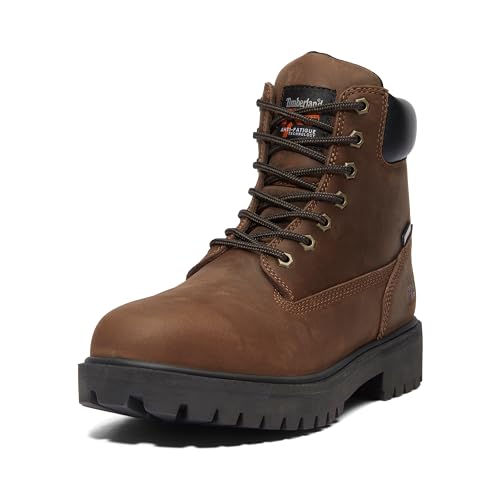
KEEN Utility
KEEN Utility Men's Pittsburgh 6" Leather Waterproof Steel Toe Work Boots
ASIN B004LE7XP6
View on Amazon


Frequently asked questions
Waterproof vs. Water-Resistant Work Boots FAQ
Is water-resistant the same as waterproof?
No. Water-resistant construction addresses more limited exposure. Waterproof is a stronger explicit claim, although no boot prevents entry over the opening or through damage.
Can boot spray make water-resistant work boots waterproof?
No. A compatible treatment may improve resistance at the surface, but it cannot add a waterproof membrane, sealed construction, or a molded shell.
Do waterproof boots guarantee dry feet?
No. Water can enter over the collar, damaged areas may leak, and sweat can create internal dampness. Use the boot within its stated limits.
Which is better for hot indoor work?
If water exposure is only incidental, a more breathable water-resistant or untreated option may feel less warm, provided it meets all workplace requirements.
Final verdict
What to do next
Choose waterproof work boots when repeated external water justifies their explicit construction, and water-resistant boots when exposure is brief and limited enough for that lesser claim. Keep height, fit, internal moisture, traction, and material compatibility in the analysis. Most importantly, preserve the exact language attached to each model instead of turning every wet-weather boot into “waterproof.”
Compare Waterproof Steel Toe Boots