The best winter steel toe boots are selected as a cold-weather system, not by picking the thickest-looking pair. A worker moving between a heated cab and a frozen yard has different needs from someone standing outdoors for hours. Exact insulation wording, water construction, sock volume, traction, and the employer’s hazard assessment all belong in the decision.
Our current catalog contains four boots whose Amazon titles explicitly say insulated: a Carhartt Heritage Wellington, a Hunthor rubber work boot, and brown and black Timberland PRO Direct Attach variants. Those titles support a focused shortlist, but they do not reveal every temperature limit, standard marking, or fit outcome. Verify the exact model documentation before use.
Best winter steel toe boots start with exposure time
Describe the shift in blocks: time outdoors, activity level, heated breaks, wind, standing water, and surface changes. Active walking produces more heat than stationary monitoring, while frequent indoor transitions can make a heavily insulated boot uncomfortably warm and increase internal moisture. Choose construction for the normal pattern rather than one unusually cold morning.
Do not invent a comfort temperature from insulation language. Manufacturers may describe insulation differently, and individual circulation, socks, fit, and weather vary. If the job has a formal cold-stress program or footwear rule, that guidance outranks a general buying list.
Read insulated and waterproof as separate claims
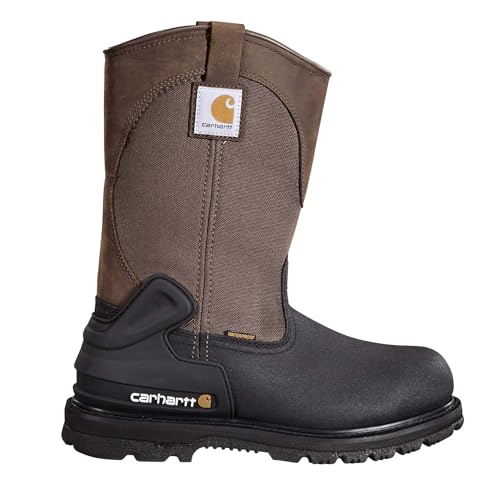
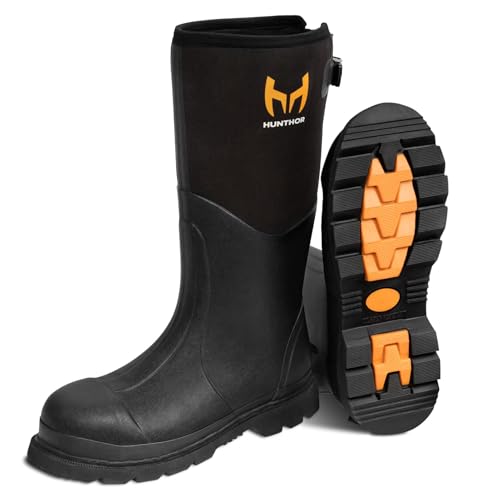
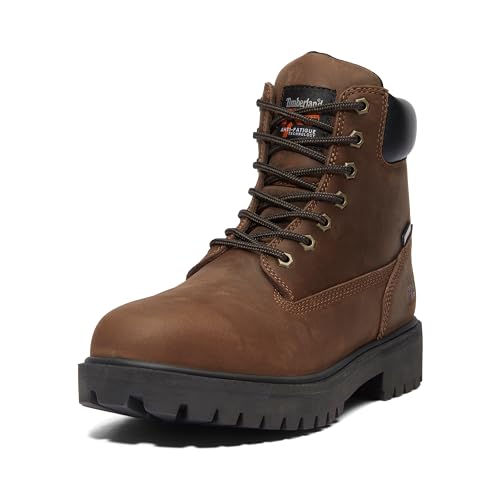
The Carhartt Heritage and Timberland PRO Direct Attach titles explicitly combine insulated, waterproof, and steel-toe language. Hunthor’s title combines waterproof, insulated 6mm neoprene, and steel toe. These are legitimate reasons to investigate the models, but each claim still needs confirmation on the exact variant and product label.
Insulation slows heat transfer; waterproof construction addresses outside water entry through specified areas. Neither stops water from entering over the collar, and waterproof layers can retain more internal heat. A tall Wellington and a six-inch lace-up therefore solve different weather and entry problems even when both titles mention insulation.
Fit around winter socks and a rigid cap
Try boots with the actual winter sock thickness. Extra fabric consumes width and height and can push toes toward the cap, while an oversized boot can let the heel lift and the foot slide forward. Fit the longer foot, then confirm that the smaller foot remains controlled through stairs, walking, and crouching.
Leave clearance at the cap’s front, sides, and roof without relying on excessive length. Compression from tight footwear can make a cold shift feel worse, but a loose boot creates friction and instability. The steel cap will not stretch, so cap contact calls for another width, size, or last before work.
Choose lace-up control or pull-on coverage
The Timberland PRO Direct Attach is a six-inch lace-up work-boot format, allowing adjustment across the instep and ankle. The Carhartt Heritage title identifies an eleven-inch Wellington, and the Hunthor listing identifies a tall rubber hunting/work style. Pull-ons simplify entry and provide a taller shaft, but their heel and instep retention cannot be tuned as precisely.
Test pull-ons on inclines and stairs rather than accepting repeated heel lift. Test lace-ups with cold hands or gloves if changes happen outdoors, and secure the laces according to workplace procedure. Boot height should respond to snow, splash, and debris without being mistaken for a sealed opening.
Traction and moisture management matter together
Snow, slush, smooth indoor floors, frozen ruts, and wet metal access points demand different outsole behavior. No boot is slip-proof, and an outsole that feels useful in loose snow may track water onto tile. Verify model-specific claims, clear packed tread, and follow site controls for ice and contaminated surfaces.
Moisture from perspiration can chill feet during lower activity. Use suitable socks, change damp layers when procedures permit, and let boots dry according to manufacturer guidance away from damaging direct heat. Alternating dry pairs can be more practical than asking one saturated boot to recover overnight.
Make a winter shortlist by scenario
Compare the catalog’s four exact insulated titles by format before secondary preferences. The Direct Attach variants represent a laced industrial boot; the Heritage represents an insulated waterproof Wellington; the Hunthor represents a tall rubber/neoprene direction. Color variants do not create different performance assumptions.
- Mixed indoor and outdoor: balance insulation with heat and drying needs.
- Repeated splash or snow: examine verified water construction and shaft height.
- Uneven winter ground: prioritize stable fit and task-appropriate outsole evidence.
- Thick socks: retest cap height, width, and heel hold.
Exact Amazon listings
Products to compare for this guide
Affiliate disclosure: As an Amazon Associate, we may earn from qualifying purchases. Product titles, images, ASINs, and destinations are matched to the exact listing; prices and availability remain on Amazon.

Frequently asked questions
Best Winter Steel Toe Boots FAQ
Are all waterproof steel toe boots insulated?
No. Waterproof and insulated describe separate construction goals. Confirm both words and their supporting documentation on the exact model rather than inferring one from the other.
Should winter steel toe boots be a size larger?
Not automatically. Fit with intended socks, then change the dimension that is wrong. Unnecessary length can cause heel lift, while a proper width or different last may supply needed room.
Does a steel cap make feet colder?
Cap material can influence temperature sensation, but insulation, socks, moisture, boot volume, activity, and exposure duration all matter. Evaluate the complete system rather than promising an outcome from one component.
Can insulated boots be too warm indoors?
Yes. A heavily insulated, waterproof system can retain heat during active or heated work. Workers who transition often should balance outdoor exposure with indoor comfort and moisture management.
Final verdict
What to do next
For a laced winter work-boot direction, investigate the exact Timberland PRO Direct Attach insulated waterproof variants. For taller pull-on formats, compare the Carhartt Heritage Wellington and Hunthor rubber/neoprene listing. The catalog does not support a numeric warmth ranking, so none should be declared universally warmest.
Choose only after confirming required protection, winter-sock fit, water exposure, outsole needs, and drying plan. A boot that manages cold but fails heel control or workplace documentation is not the best winter choice.
Compare Steel Toe Boots