This Carhartt steel toe boots sizing guide treats Traditional Welt, Rugged Flex, moc wedge, Heritage Wellington, and Frontier Chelsea as separate fits. Laces, tall pull-on shafts, and elastic gore retain the foot differently. Men's and women's Frontier listings also use distinct sizing contexts. A number that works in one cannot automatically transfer to another.
Similar Carhartt colors, waterproof or insulated variants, widths, and revisions can differ. Use the exact ASIN and current chart. The goal is balanced volume: enough room to prevent cap contact, but enough heel and midfoot control to stop forward slide. The upper may soften with normal wear; the steel cap does not stretch.
Carhartt steel toe boots sizing guide measurements
Measure heel-to-toe length and forefoot width on both feet late in the day while wearing intended work socks. Use the larger relevant measurement with the current chart for the exact model. Do not base the order solely on a casual shoe, an old work boot, or a coworker's Carhartt size.
Record the complete width designation. The catalog contains exact medium and wide variants, but availability differs. Width can change instep and heel volume along with forefoot room. If measurements fall between sizes, compare adjacent sizes or widths indoors. Extra length can shift the flex and increase heel lift, so it is not the first answer to side pressure.
Fit Traditional Welt, Rugged Flex, and moc lace-ups
Seat the heel before tightening laces, then adjust evenly from forefoot to ankle. The laces should hold the midfoot without numbness or focused pressure. Walk quickly, turn, crouch, and climb. The boot should bend near the ball of the foot and keep the heel controlled. Toe movement should not meet a hard cap edge.
Traditional Welt, Rugged Flex, and waterproof moc wedge models may use different platforms or linings. Fit each independently. A wedge outsole can change the underfoot feel but does not alter the cap-clearance rule. A lace-up can tune volume; it cannot make a short or narrow steel cap expand.
Fit Heritage Wellington pull-ons
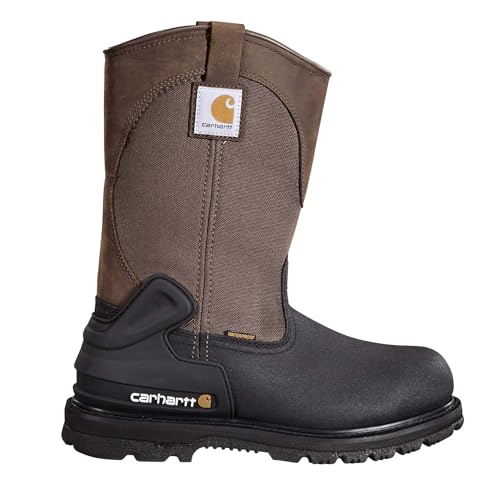
Use the pull-on opening without painful force, then let the heel settle. The instep should retain the foot through turns, stairs, and crouching. Some movement can occur in pull-on boots, but repeated lift that causes friction or lets the foot slide forward is excessive. Evaluate the eleven-inch shaft against the calf and during kneeling.
Waterproof and insulated waterproof Heritage listings may feel different because exact construction varies. Test the actual sock system; thick socks can reduce cap space and change instep pressure. Do not size up automatically for insulation. Match the exact variant and reject a pair whose shaft coverage masks unstable foot fit.
Fit men's and women's Frontier Chelsea boots
Chelsea gore should flex enough for entry yet recover to support the instep. Walk fast and turn to reveal heel lift. An oversized Frontier can feel conveniently loose but allow dangerous forward movement; an undersized one can compress the instep or toes. Check collar rubbing and pull-tab stress.
Fit men's and women's listings from their own current charts rather than relying on a generic conversion. Last shape and heel geometry may differ. The water-resistant title does not change sizing, but socks selected for weather will. Elastic can relax over time, while the cap remains fixed, so choose initial retention carefully.
Check cap room and width in motion
With full weight on both feet, wiggle toes and check front, side, and top clearance. Walk down a controlled ramp, crouch, and use a step. Fixed rubbing, toe impact, sharp pressure, tingling, or numbness indicates a poor fit. Sensation during motion is more reliable than pressing the outside of a moc or round toe.
When length and flex are correct but the forefoot is crowded, compare an explicitly wide variant. Ensure that added volume does not loosen the heel. If both standard and wide fail in different ways, another Carhartt model or brand last may be more appropriate. Do not modify, hammer, or stretch the protective area.
Break in safely and recheck fit
Begin with short indoor wear under the return policy. Increase duration only when there is no cap contact, harmful heel lift, or concentrated pressure. Normal leather softening and footbed settling may occur. Avoid soaking, aggressive bending, unapproved chemicals, and intense direct heat, which can damage materials or construction.
Follow the exact model's care instructions and recheck fit after changing socks or approved insoles. Inspect laces, gore, pull tabs, lining, tread, and cap area after impacts. A boot can become less stable as it wears. Follow employer inspection and replacement policy instead of assuming an initially correct size remains adequate indefinitely.
Exact Amazon listings
Products to compare for this guide
Affiliate disclosure: As an Amazon Associate, we may earn from qualifying purchases. Product titles, images, ASINs, and destinations are matched to the exact listing; prices and availability remain on Amazon.

Carhartt
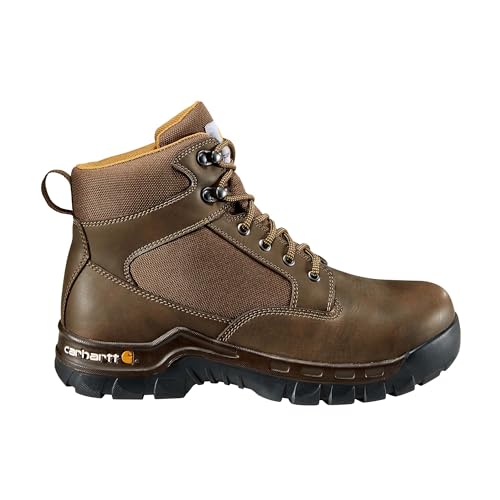
Carhartt Men's CMF6284 Rugged Flex® Steel Toe Work Boot, Brown,11 W
ASIN B08KTD6N59
View on Amazon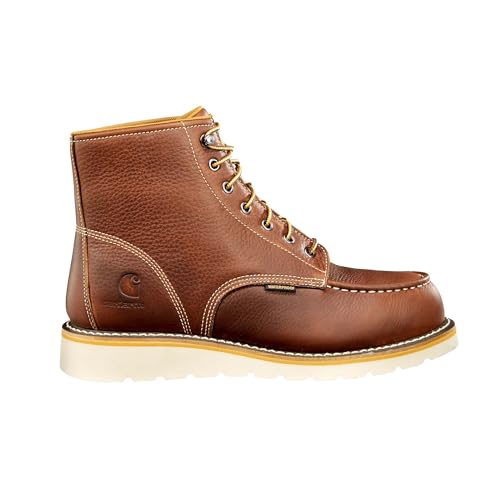


Frequently asked questions
Carhartt Steel Toe Boots Sizing Guide FAQ
Do Carhartt steel toe boots run true to size?
No single rule covers Traditional Welt, Rugged Flex, moc wedge, Wellington, and Chelsea constructions. Measure, use the exact model chart, and perform an indoor trial.
Should I size up in Carhartt steel toes?
Not automatically. Added length can misalign flex and increase heel lift. If length is right but width is tight, compare an exact wide listing or another last.
How should a Carhartt Wellington fit?
The instep should retain the foot, the heel should avoid excessive lift, the shaft should not create harmful pressure, and toes should stay clear through walking and crouching.
Will Carhartt steel toe boots stretch?
Uppers can soften and footbeds can settle, but the steel cap does not expand. Fixed cap pressure requires a different size, width, or model.
Final verdict
What to do next
Correct Carhartt sizing is model-specific. Use laces to secure, not rescue, Traditional Welt, Rugged Flex, or moc models; demand instep retention from Heritage and Frontier pull-ons; and compare width before excess length. The winning size clears the cap in motion, aligns the flex, and holds the heel with real work socks.
Compare Carhartt Steel Toe Boots