A shortlist of the best steel toe work boots for men begins with tasks. Record how much time the shift spends on finished floors, ladders, loose ground, equipment pedals, or wet outdoor routes. Add the employer’s footwear requirements and any separate need for puncture resistance, waterproofing, electrical properties, or a particular height. A steel-toe title identifies a seller’s claim about cap material; the exact shoe’s label and manufacturer documentation must confirm the required protection.
Catalog breadth can help reveal choices, but the final decision is physical. Men’s boots with the same labeled size can differ in forefoot width, instep volume, heel pocket, and where the sole bends. Fit both feet with normal work socks, test job-like movements indoors, and verify every claimed feature on the exact style rather than transferring it across a brand family.
Best steel toe work boots for men by trade
Start by grouping work rather than products. Long indoor walking favors a stable platform and controlled weight; uneven outdoor terrain raises the importance of tread and upper coverage; repeated kneeling makes flex location important. The Timberland PRO Endurance title specifically includes puncture resistance, while that feature is absent from the CAT Second Shift and Wolverine Loader titles. Investigate only the attributes relevant to the actual hazard review.
Choose boot height with a purpose
Six-inch and eight-inch boots create different coverage and ankle feel. The Wolverine Loader title identifies an eight-inch wedge boot, and the Timberland PRO Pit Boss title identifies a six-inch industrial boot. Taller is not automatically safer, and lower is not automatically more comfortable. Consider debris, employer rules, climbing, driving, and how the collar interacts with the leg through a full stride.
Balance outsole shape and work surface
Wedge platforms can feel different from more defined heel profiles on floors, ladders, and irregular ground. The product name alone does not prove compatibility with a particular site. Inspect tread geometry, look for exact-model testing relevant to the workplace, and remember that no boot prevents every slip. Packed mud, dust, and wear can change usable traction, so cleaning and inspection belong in the selection plan.
Fit width before adding length
Several featured listings provide useful width cues: the CAT Second Shift shown is wide, the Carhartt Rugged Flex is listed in 11 W, and the Timberland PRO Pit Boss example is 10.5 W. Those labels are starting points, not interchangeable measurements. If the cap presses at the sides, compare another width or last; sizing longer can shift the flex point and loosen the heel.
Judge comfort as stable fit over time
Initial softness can be appealing, but all-shift comfort also needs heel control, correct flex, toe clearance, and a platform that does not demand constant correction. The foot should remain seated during slopes and stairs without aggressive lacing. Try any workplace-approved insole during the indoor fit test because added thickness can reduce volume and lift toes toward the steel cap.
Check the exact protection markings
The Thorogood American Heritage title names full-grain leather, a slip-resistant wedge outsole, and EH rating; those words support investigating that exact listing for those needs. The CAT, Wolverine, Carhartt, and Timberland examples have different titled details. Do not infer waterproofing, insulation, metatarsal coverage, or other safety properties when the title is silent. Confirm current documentation before workplace use.
Create a final trade-and-fit scorecard
For each exact model, score only documented and observable factors: required markings, height, closure, width choice, heel control, cap clearance, flex alignment, surface-relevant outsole information, and weather construction. Weight missing employer requirements as automatic exclusions rather than small disadvantages. Then compare finalists during the same indoor movement sequence and with the same socks. This keeps a visually rugged boot from outranking a better-matched one simply through appearance. It also makes the purchase decision repeatable when the same worker later evaluates a different size, because the criteria stay attached to the job rather than to brand familiarity.
- Save the exact style and width with the score; a family name alone is not enough for a repeat purchase.
Exact Amazon listings
Products to compare for this guide
Affiliate disclosure: As an Amazon Associate, we may earn from qualifying purchases. Product titles, images, ASINs, and destinations are matched to the exact listing; prices and availability remain on Amazon.


Wolverine
Wolverine Men's Loader 8" Steel Toe Wedge Work Boot, Brown, 9 M US
ASIN B01MU264YP
View on Amazon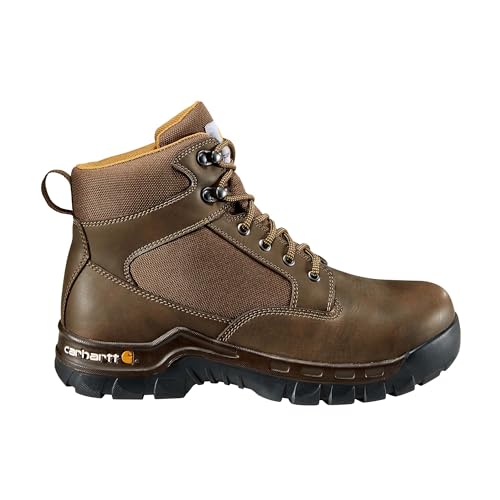
Carhartt
Carhartt Men's CMF6284 Rugged Flex® Steel Toe Work Boot, Brown,11 W
ASIN B08KTD6N59
View on Amazon
Timberland PRO
Timberland PRO Men's Pit Boss 6 Inch Steel Safety Toe Industrial Work Boot, Brown-2024 New, 10.5 W
ASIN B0CVNM8B28
View on AmazonSources and model documentation
Frequently asked questions
Best Steel Toe Work Boots for Men FAQ
Should men’s steel toe work boots fit loose?
No. They require clearance around the toes, but the heel and midfoot should remain controlled. Excess movement can create friction and toe impact on slopes.
Are eight-inch steel toe boots better than six-inch boots?
Only when the additional coverage fits the work. Height also changes weight, collar feel, and mobility, so choose it around the site and employer rules.
Can men wear a wide boot to get more toe room?
Yes, when forefoot width is the real issue and the heel stays secure. Width labels vary, so compare the exact last rather than assuming a universal fit.
Are all steel toe work boots suitable for construction?
No. Construction sites vary, and steel toe construction does not establish every required feature. Follow the project’s hazard assessment and footwear rules.
Final verdict
What to do next
The best steel toe work boots for men are not a generic top seller; they are a trade-matched, documented, correctly fitted tool. Shortlist by required protection and terrain, compare height and outsole, then keep only pairs that hold the heel and clear the cap in every movement the shift demands.
Compare Men’s Steel Toe Boots