Learning how to choose steel toe shoes is mostly an exercise in eliminating mismatches. The words steel toe answer only one question about a shoe. They do not establish traction on your floor, electrical properties, puncture protection, water management, or adequate coverage. Your employer’s requirements and the exact model documentation should therefore set the first boundary.
After that, fit becomes the decisive personal variable. Feet with the same measured length can differ in width, instep volume, heel shape, and toe spread. A useful buying process tests those dimensions during work-like movement instead of assuming the usual casual-shoe size will transfer unchanged.
How to choose steel toe shoes from the hazard assessment
Write down the required protection before browsing. Confirm whether the job permits a low-cut shoe and whether it specifies any property beyond the protective toe. Electrical-hazard, static-dissipative, puncture-resistant, metatarsal, waterproof, and outsole claims are independent; never infer them from a cap or a familiar brand name.
Check the marking and documentation on the exact style and variant. Online titles can change or compress information, and adjacent color or size pages may not represent an identical construction. If a requirement is unclear, ask the employer or safety contact rather than choosing the most aggressive marketing phrase.
Decide between shoe coverage and boot coverage
Low-cut work shoes favor ankle mobility and can feel less cumbersome for walking, driving, squatting, or working indoors. That advantage has a boundary: the collar cannot block debris or water above its height, and it provides less upper coverage around the ankle than a boot.
Evaluate the worst routine part of the shift, not the cleanest hour. Smooth indoor floors and occasional dry outdoor crossings often support a shoe format. Deep mud, rubble, repeated splash, uneven ground, or a formal height rule can move the decision toward boots even when a sneaker silhouette seems more comfortable.
Select an outsole for the real surface
Map the route: polished concrete, wet tile, oily shop areas, steel stairs, ladders, asphalt, and gravel each place different demands on tread and stability. For candidates such as Nautilus Westside or Fila Memory Breach, investigate the exact model’s slip-resistance evidence for those surfaces. Do not substitute an oil-resistance claim, which concerns sole damage rather than oily-floor grip. No outsole makes every surface safe.
Inspect how easily the tread can be cleaned, because packed debris changes the contact surface. For ladder work, uneven terrain, or specialized contamination, follow workplace criteria instead of treating a generic walking-shoe sole as universally suitable.
Fit around a cap that will not break in
Measure both feet and fit the longer one while preserving control of the smaller. Wear the same sock thickness and any approved insole planned for work. Extra material under the foot can raise the toes toward the cap, so test the complete system rather than the empty shoe.
Check clearance while standing, walking quickly, descending, and crouching. Contact at the cap’s front, side, or roof will not disappear as the upper softens. If length is adequate but the forefoot is squeezed, seek another width or toe-box geometry. If the heel lifts, do not solve it by accepting painful toe pressure.
Compare closures and upper materials
Laces allow targeted adjustment through the midfoot and can accommodate modest volume changes. Slip-ons simplify entry and remove loose lace ends, but they must control the heel through elastic, instep shape, and opening geometry. Test either style on stairs, turns, and a brisk walk.
Athletic textiles may provide flexible indoor wear, whereas leather or smoother materials can be easier to wipe after dusty tasks. A material’s appearance does not establish resistance to sparks, chemicals, water, or abrasion. Match verified construction to exposure and accept that more barrier can also mean more heat or stiffness.
Evaluate comfort without being misled
Immediate softness is only one piece of all-shift comfort. Look for a stable base, a secure heel, a flex point aligned with the forefoot, and sufficient volume over the toes. Very soft cushioning that lets the foot move excessively or lifts toes into the cap can be counterproductive.
- Try pairs later in the day when practical.
- Walk on an incline and make controlled turns.
- Confirm the insole does not crowd the cap.
- Reject persistent rubbing before taking the shoe to work.
Exact Amazon listings
Products to compare for this guide
Affiliate disclosure: As an Amazon Associate, we may earn from qualifying purchases. Product titles, images, ASINs, and destinations are matched to the exact listing; prices and availability remain on Amazon.
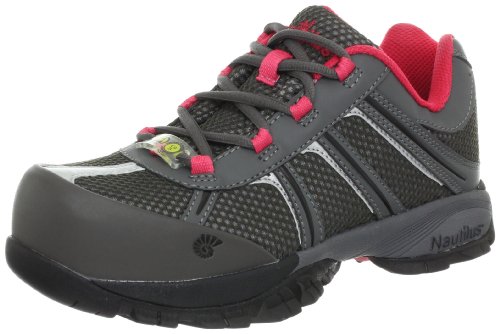
Nautilus
Nautilus Safety Footwear Specialty SD N1393 Steel Toe Athletic Work Shoes, 8 M
ASIN B005BK5WCA
View on Amazon


Timberland PRO
Timberland PRO Men's Intercept Steel Safety Toe Industrial Athletic Work Shoe, Black, 11W
ASIN B0CC4QTJWX
View on AmazonSources and model documentation
Frequently asked questions
How to Choose Steel Toe Shoes FAQ
Should I buy steel toe shoes one size larger?
Not automatically. Extra length can create heel lift while failing to solve a width or shape problem. Begin with measured length and normal width, then change width or last based on where contact occurs.
Can the steel toe stretch after several shifts?
No. Some upper materials can soften, but the rigid protective cap does not expand. Pressure against it is a reason to exchange the size or model before extended wear.
How do I know if a sneaker-style work shoe is suitable?
Confirm its exact required markings and compare its coverage, upper, outsole, and fit with the work environment. Athletic appearance says nothing by itself about hazard suitability.
What should I verify on an online listing?
Match the exact style and variant, then verify the product label or manufacturer documentation for required properties. Do not transfer claims from a similar-looking model or another size page without confirmation.
Final verdict
What to do next
Choose in a fixed sequence: workplace requirement, coverage, surface, exposure, fit, and only then personal preferences. That sequence prevents the most common errors—buying by silhouette, tolerating cap contact, or assuming steel toe includes unrelated protections.
A good steel toe work shoe feels uneventful in motion: toes remain clear, the heel stays seated, and the outsole suits the route. If any of those conditions fail during an indoor try-on, use the return window rather than hoping a rigid component will change.
Compare Steel Toe Shoes