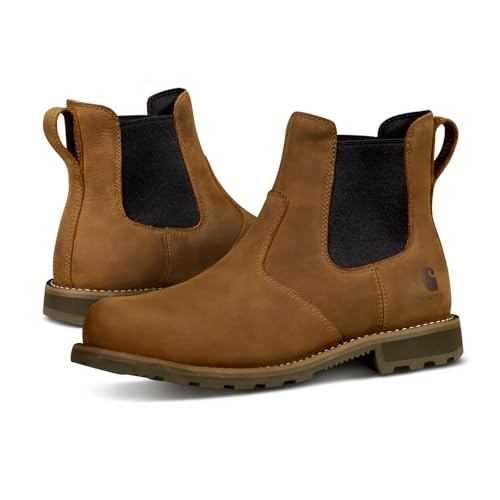
The short pull-on alternative
The manufacturer specifies Rain Defender leather, an EVA midsole, an Insite footbed and a rubber lug outsole for the Frontier. The Chelsea design makes sense to compare when a full Wellington shaft is unnecessary and you want to avoid laces.
Stretch gore helps the foot pass through the opening; it is not a substitute for selecting the right instep volume. Walk in the boot to check heel movement, and compare a lace-up if you need more adjustment across the top of the foot. The listed medium width should not be assumed to fit like every other Carhartt model.
Keep its water protection in perspective
Rain Defender is described for light rain. This is a water-resistant boot, so it should not inherit waterproof claims from the Heritage or moc wedge simply because all three are Carhartt work boots. A tall PVC boot is a more relevant format to compare when repeated washdown or standing water drives the choice.
The rubber lugs and defined heel describe the outsole shape. They do not guarantee traction on every wet surface or suitability for every ladder. Follow the workplace’s footwear and access-equipment requirements.
Confirm the selected safety version
Carhartt sells different Frontier variants, including non-safety options. Verify the steel-toe model on the delivered pair. The manufacturer describes electrical-hazard protection for this family as secondary protection in dry conditions; it is not permission to work on live equipment. For purchasing older inventory, use the actual markings rather than assuming the newest website standards appear on every pair.